Connected Fitness Mirrors Comparison: Avoid Buyer Regret
A connected fitness mirror comparison is really about choosing an ecosystem you can live with for years — not just a sleek screen for your wall. These systems got popular because they save space, look cleaner than a rack of equipment, and deliver guided workouts at home. But once I started comparing them seriously, the glossy marketing fell away fast: the real questions were about subscription lock-in, strength limits, installation hassle, and whether the thing would still feel useful after month six. The glossy screen hides the fact that the real workout lives in the monthly fee, not the glass.
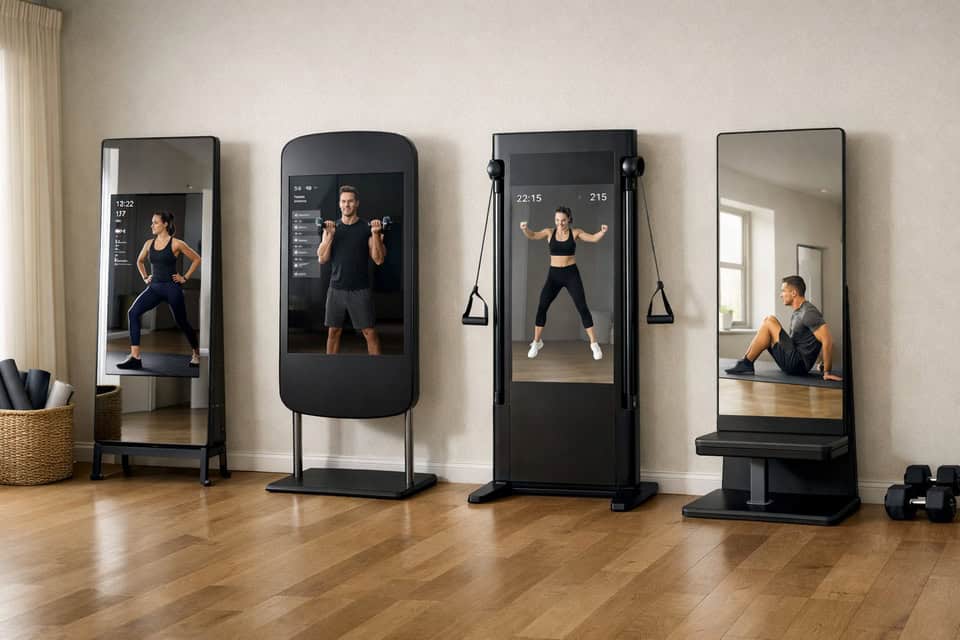
If you want the short version, here it is: Tonal is usually the strongest pick for people who care most about progressive strength training, Tempo works better if you want guided strength with more traditional equipment, and Mirror and Forme make more sense for classes, mobility, and small-space aesthetics. The best choice depends less on specs and more on how you actually train at 6:30 a.m. in a cramped room with a monthly budget you still care about. At 6:30 a.m., the cramped room makes the mirror’s size feel like a trade-off, not a feature.
If You Need a Fast Answer, Start Here
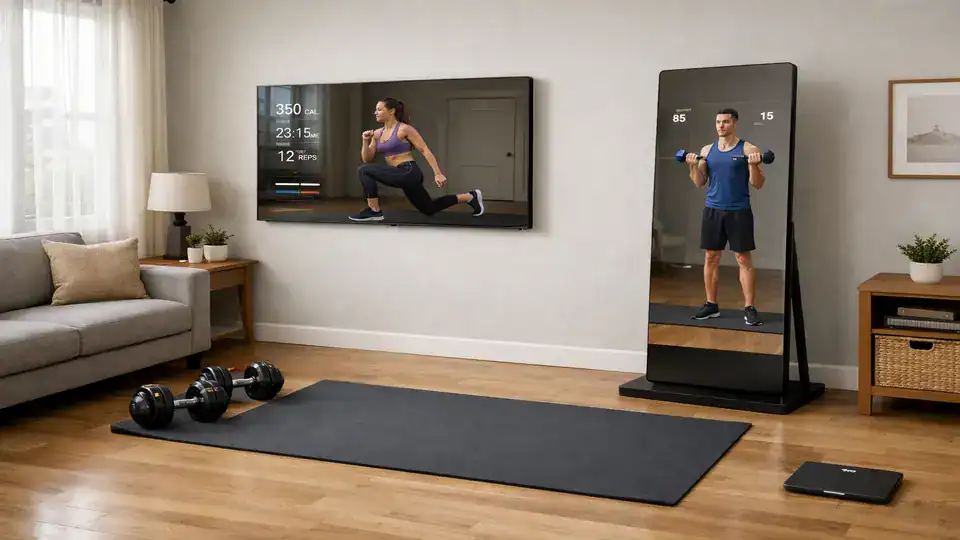
There’s no single best connected fitness mirror for everyone. In a practical fitness mirror comparison, the winner depends on your main training goal. If you want resistance progression and coaching that feels closest to a smart personal trainer, Tonal stands out. If you prefer real plates and accessories, Tempo is often easier to understand and live with. If your workouts are mostly yoga, barre, mobility, HIIT, or guided classes, Mirror and Forme feel more natural. If your gym bag already collects dust, the mirror that demands the least from you might give back the most.
For small apartments, I lean toward Mirror or Forme because they preserve floor space better and look less like gym hardware when not in use. For mixed households, Tempo can be a nice middle ground if one person wants strength and another wants classes. And if you already know you dislike monthly fees, I would honestly stop here and reconsider the category. The wrong smart gym can become an expensive mirror with a bill attached.
You can verify current product details directly on Tonal, Tempo, and the broader category overview from One Strong Southern Girl. Pricing and bundles change more often than many buyers expect.
Why This Purchase Matters More Than It Looks
A connected mirror isn’t just hardware. It’s a long-term service relationship. You’re buying into a training style, a software experience, a class library, and in some cases a fixed installation that’s annoying to reverse. That matters because the monthly fee often shapes the product more than the glass and metal do. You’re not really buying a mirror — you’re signing up for a coach you pay every month, whether you show up or not.
One thing I learned while comparing systems is that the clean look can hide very different ownership models. Some products are basically interactive class displays. Others, like Tonal, are closer to a digitally controlled resistance machine. Tempo sits in between by pairing coaching with physical equipment. That means a smart fitness mirror vs Tonal comparison is not really apples to apples. One is often a class platform. The other is a strength device with a screen-like interface.
There is also market volatility. Features, subscriptions, financing, and even product names can shift by region and over time. A system that looks competitive today may feel pricier a year from now once membership changes land. Buy the current experience, but plan for the possibility that the rules will change.
The Snapshot That Makes the Connected Fitness Mirrors Comparison Easier
| Product | Upfront Cost Range | Monthly Subscription | Workout Focus | Equipment | Setup Style | Home Reality |
|---|---|---|---|---|---|---|
| Mirror | Varies by retailer and availability | Membership-based | Cardio, yoga, barre, strength classes | Usually minimal; accessories optional | Wall-leaning / mounted depending on version | Low visual clutter, but strength progression is limited |
| Tonal | Premium hardware plus installation | Membership-based | Strength, mobility, some cardio content | Digital resistance arms and smart accessories | Wall-mounted | Strongest training capability, hardest to move later |
| Tempo Studio / Move | Mid-to-premium depending on bundle | Membership-based | Strength, HIIT, mobility, classes | Weights, plates, mat, accessories vary | Freestanding / cabinet-style | More floor gear, more familiar gym feel |
| Forme | Premium pricing varies by model | Membership-based | Classes, personal training, wellness sessions | Usually lighter accessory emphasis | Wall-mounted / freestanding by model | Very polished look, less ideal for heavy strength goals |
The numbers above are intentionally broad because exact bundles change. What matters in a real home is this: Tonal uses the least loose equipment but needs a proper wall install; Tempo asks for more floor storage; Mirror and Forme disappear visually better when the workout ends. Each one asks you to trade one kind of space for another.
What Actually Feels Different Once You Compare Them Side by Side
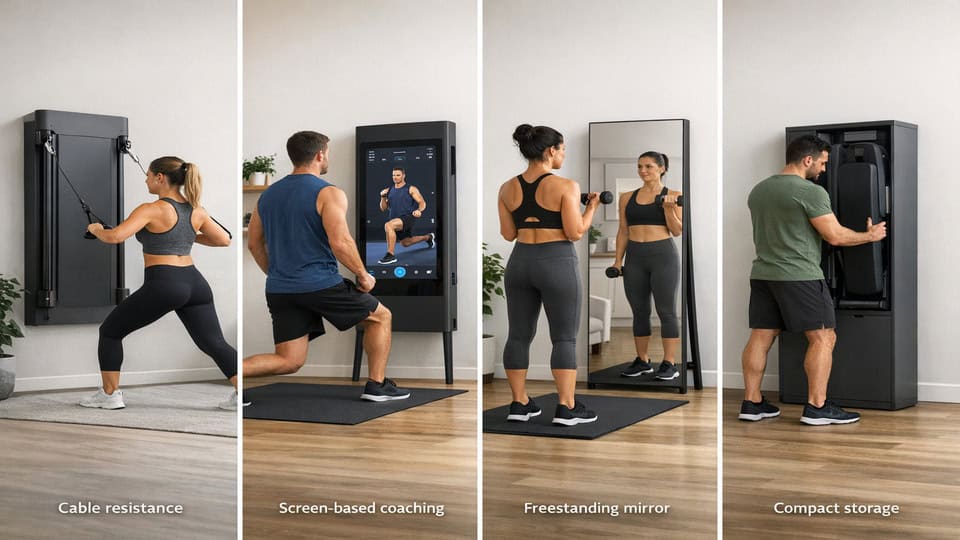
The first real difference is hardware capability. Tonal isn’t just reflective glass with streaming classes—it’s a resistance system. That changes everything about progression, load, and coaching. If your goal is getting stronger over time with measurable resistance increases, Tonal has a clear edge. Tempo, by contrast, feels more like a guided home gym that works with real-world equipment. I found that distinction more useful than any spec sheet. The resistance loads stack differently than free weights, and your body notices the difference by the third rep.
Mirror and Forme shine when the experience matters more than load. The screen presence is calmer, the room stays cleaner, and the workouts often feel less intimidating for beginners or mixed households. If your routine includes yoga, Pilates, bodyweight circuits, mobility, and occasional dumbbell work, these systems can be enough. But here is the honest downside: mirrors are weaker for progressive overload than cable-based systems or a traditional rack setup. If you already know you care about heavy lower-body work or long-term strength progression, that limitation shows up sooner than marketing suggests.
Coaching quality also varies. Tonal leans into data, rep tracking, and strength progression. Tempo emphasizes form guidance and structured training with physical equipment. Mirror and Forme often feel more class-led and less analytics-heavy. That is not automatically worse. In fact, my partner preferred the lower-pressure class style because it felt easier to start. I preferred clearer progression markers. Same room, different priorities.
Then there is software reliability and internet dependency. All of these systems depend on stable connectivity for the best experience. If your Wi-Fi drops in the middle of a class, the premium feel disappears fast. Menus, profile switching, camera features, and class loading speed matter more than buyers expect. I have seen people obsess over frame design and ignore the daily friction of logging in, switching users, and finding a workout quickly before work.
Multi-user support is another quiet differentiator. If two or three people will use the system, personalization matters: saved programs, strength baselines, favorite instructors, and schedule flexibility. A beautiful mirror that only one person enjoys isn’t good value. The best system is the one your household will actually keep using after the novelty wears off. A mirror that works for everyone in the house costs more upfront but saves the cost of a second subscription later.
The Mistakes That Make These Systems Feel Too Expensive
Measure usable workout space, not just wall space.
Calculate the 24-month total cost before buying.
Subscription lock-in affects usability and resale value.
My first mistake was focusing too much on footprint and not enough on movement clearance. A mirror might only take a narrow slice of wall, but your body still needs several feet in front of it. In a small apartment, that means checking where your knees, elbows, and dumbbells go when a class picks up speed. The room can look minimal in product photos and still feel cramped in real life. Your elbows learn the room’s dimensions faster than your eyes do.
The second common mistake is underestimating the subscription. Buyers often compare hardware prices and stop there. Don’t. For example, a system with a monthly fee around the cost of a boutique class can add well over $1,000 across two years. That changes the answer to the interactive fitness mirror cost question. A bargain upfront can become expensive ownership, while a pricier machine with stronger long-term utility may actually be the better value.
I also think many people buy for the sleek design and then realize they wanted deeper strength progression. That regret shows up especially with class-first mirrors. If your real goal is building muscle steadily, not just staying active, a pure mirror format may start to feel limiting. That’s not a flaw for every user, but it’s a mismatch for some. This format asks you to know what you actually want before you commit.
Which System Fits Your Life, Not Just Your Wishlist
Beginner or low-intimidation buyer: Mirror or Forme usually make the easiest on-ramp. They look less like gym equipment and more like part of the room, which matters if motivation is fragile or you share the space. The less they look like gear, the easier it is to actually use them.
Cardio and class-focused user: Mirror often makes more sense. If you want instructor-led sessions, variety, and a simple setup, it stays appealing. For a home gym mirror review angle, this is where mirrors feel most natural.
Strength-focused buyer: Tonal or Tempo. Tonal is stronger if you want smart resistance and progression. Tempo is better if you want real weights and a more traditional training feel. In the Mirror vs Tempo vs Forme conversation, Tempo is usually the one that feels most like an actual home gym rather than a class screen.
Small-space buyer: Mirror or Forme. They are often the best fitness mirror for small spaces because they keep the room visually open. Tonal can also work in tight spaces, but installation and wall requirements make it less flexible for renters.
Aesthetic-first buyer: Forme. If design matters a lot and you want the room to still feel like a bedroom or living area, Forme has appeal. You might want to skip this whole category if you are budget-sensitive, dislike memberships, move often, or already know you want heavy lifting without limits. The design win comes with a membership cost that doesn’t make sense for everyone.
Use This Checklist Before You Spend Anything
| Step | What to Check | Why It Matters |
|---|---|---|
| Define your main goal | Strength, cardio, mobility, or mixed use | This rules out the wrong category fast |
| Measure real space | Wall width, ceiling height, and movement clearance | Prevents buying a system that technically fits but feels awful |
| Set a 2-year budget | Hardware, delivery, install, accessories, membership | Shows true value, not just sticker price |
| Choose equipment level | No gear, some gear, or full strength setup | Keeps expectations realistic |
| Check installation limits | Wall type, landlord rules, delivery access | Avoids setup surprises and moving headaches |
| Verify current pricing | Current bundles, financing, and membership terms | These details change frequently |
When I use this checklist, the decision gets less emotional. You stop asking which product is coolest and start asking which one still makes sense after rent, floor plan, and actual training habits enter the picture.
Related TheLife Nexus Guides
If you are building a healthier home routine around this purchase, these related guides can help you compare the connected fitness mirror category with adjacent wellness tech and smart home decisions.
- Best Smart Jumping Ropes for Cardio — useful if you want a lower-cost cardio add-on before buying a full smart gym.
- Best Apps for Anxiety and Stress Relief — good for pairing fitness routines with recovery and stress management.
- Mental Health Tracking with Wearables — helpful if you want recovery and readiness data alongside workouts.
- Best Meditation Headbands With Brain Sensors — relevant if your fitness mirror purchase is part of a broader wellness tech setup.
- Smart Home Setup Guide for Beginners — useful before adding another connected device to your home network.
The Questions Most Buyers Still Have
Are fitness mirrors actually worth it?
They are worth it if convenience, guided coaching, and space efficiency will make you work out more consistently. They are not worth it if you resent monthly fees or already have a gym routine you enjoy. For many people, the real value is reduced friction: no commute, no class booking, and a system that is ready in seconds.
Can you use a fitness mirror without a subscription?
That depends on the platform, but in many cases the best features are tied to membership. Some systems become much less useful without classes, tracking, or guided programming. This is why a proper fitness mirror subscription comparison matters as much as hardware specs.
Which one is best for a small apartment?
Mirror and Forme are usually the easiest fit because they keep the room visually open and require less loose equipment. Tonal can work well too if the wall and installation setup cooperate, but it is less forgiving for renters or frequent movers.
Do connected mirrors replace a gym?
For general fitness, classes, mobility, and moderate strength training, they can replace a lot. For serious heavy lifting, sport-specific training, or people who love the atmosphere of a gym, not completely. Tonal comes closest on strength, but even that is still a different experience from a full gym floor.
What should I compare before buying?
Compare real workout space, 24-month cost, strength capability, membership dependence, multi-user support, installation requirements, and how easy it feels to start a workout when you are tired or busy.
Official and External Resources
My Bottom Line After This Comparison
If your main goal is strength and measurable progression, I would start with Tonal. If you want guided strength with more familiar equipment, look closely at Tempo. If you want a cleaner class-focused experience that blends into a room, Mirror or Forme are the better fit. For broader category context, the comparison on One Strong Southern Girl is useful as a starting point.
The best connected fitness mirror is not the one with the prettiest ad. It is the one that matches your body, your room, your budget, and your tolerance for subscriptions. Buy for the workout life you actually live, not the one you imagine on a perfect Monday.
Ready to Narrow It Down?
Before you buy, do three things tonight: measure your usable workout area, write down your primary training goal, and total the 24-month ownership cost. That simple check will eliminate most bad-fit options.
If you are still deciding between strength-first and class-first systems, compare the official product pages directly: Tonal and Tempo. You will spot the ecosystem differences much faster when you look through the lens of your own space and routine.