Benefits of Reducing Screen Time Before Bed When You’re Tired but Still Scrolling
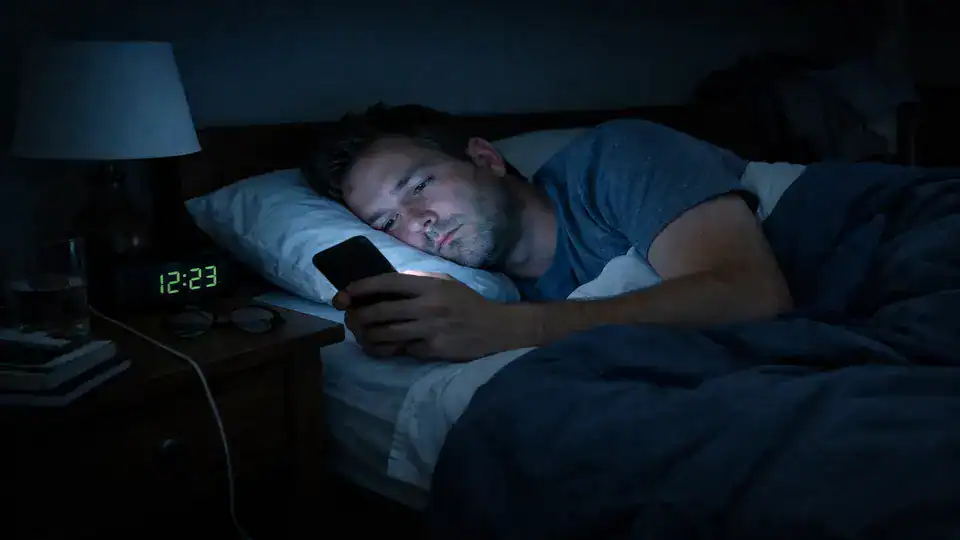
The benefits of reducing screen time before bed hit you hardest the morning after you skip it: heavy eyes, a fuzzy head, and that weird mix of being exhausted but still wired. I know that pattern well. I’ve had plenty of nights where I told myself I was “just relaxing” with my phone, only to look up 45 minutes later after a stream of messages, headlines, and videos I didn’t even care about. The phone feels like a break, but it’s really just a delay on the rest you actually need.
That’s what makes this topic tricky. Screens really do feel comforting at night. They fill the silence, distract from stress, and make bedtime feel less abrupt. But they can also quietly push sleep later, lighten sleep quality, and make mornings feel harder than they need to be. It asks you to trade a moment of comfort for a morning that actually feels restful.
This article isn’t about banning tech or pretending modern life lets you pull off a perfect digital sunset every night. A structured digital detox routine for better sleep can help you find that balance without extreme measures. It’s about figuring out what actually helps, what matters most, and how to make changes you can actually stick with. The hard part isn’t the screen — it’s the habit you’ve built around it.
Quick Summary
- Yes, reducing screens before bed often improves sleep quality, especially sleep onset, next-day energy, and mental calm.
- The main reasons are blue light before sleep, mental stimulation, emotional arousal, and habit loops that keep you awake longer than planned.
- You do not need to quit screens completely; even a 20 to 30 minute screen-free buffer can help.
- Phones tend to be more disruptive than passive TV because they combine light, interaction, novelty, and social pull.
- Blue light filters can help a bit, but they are not a full fix if the content itself keeps your brain alert.
If You’re Wondering Whether It Really Helps, the Answer Is Usually Yes
Research from sleep organizations and health systems consistently points in the same direction: screen time and sleep quality are linked. Exposure to bright light in the evening can delay melatonin release, while stimulating content can increase alertness right when your body should be winding down. Helpful overviews from Sleep Education and Mission Health both describe this pattern clearly. The light and the content hit different switches, but both tell your body to stay awake.
That said, the effect isn’t identical for everyone. Some people are highly sensitive to evening light and stimulation. Others can watch a calm show and sleep fine. But if you regularly use your phone in bed, stay up later than intended, or wake feeling mentally “muddy,” reducing nighttime screen habits is one of the simplest things to test. Testing it for a few nights is the only way to know which group you’re in.
I was skeptical at first because I thought my issue was stress, not screens. What I noticed after cutting back wasn’t dramatic instant sleep. It was subtler and more useful: I stopped dragging my way into the morning. My body started waking up before my alarm did.
Why This Matters More Than Just Bedtime
Poor sleep rarely stays contained to the night. It spills into mood, patience, focus, appetite, and motivation. When people ask about the benefits of reducing screen time before bed, they’re often really asking about the next day: Will I think more clearly? Will I snap less? Will I have more energy to exercise, cook, or handle work without feeling half-charged? It asks you to trade a familiar evening crutch for a morning that feels less like a deficit.
The answer is often yes, because sleep is a systems issue. Evening screen use can affect your circadian rhythm through light exposure, but it can also keep your mind in “input mode.” News alerts, work messages, social comparison, gaming, and endless short-form content all ask the brain to keep processing. That’s very different from genuine unwinding. Blue light gets the blame, but it’s the endless processing queue that actually keeps you wired.
There’s also an emotional trade-off here. Screens can feel like company at night. If you live alone, parent all day, study late, or finally get quiet time after 10 p.m., your phone may feel like relief. I think that’s why hardline advice often fails. It ignores the fact that many people aren’t just using screens for entertainment—they’re using them for comfort. What feels like company can also be what keeps you from resting.
What feels relaxing in the moment can still leave your nervous system more activated than restored.
What Actually Counts as Screen Time Before Bed
Not all screens disrupt sleep equally, but they all deserve a spot in the conversation: phones, tablets, laptops, TVs, handheld gaming consoles, and even some bright e-readers. The two main culprits are light exposure and stimulation level. A dim e-reader with static text is usually less disruptive than a phone buzzing with notifications, but it still counts. A quiet e-reader feels harmless until you realize it’s still a light source your brain has to work around.
| Factor | What to Know |
|---|---|
| Blue light | Can delay melatonin and shift your body clock later, especially with bright, close-up screens like phones and tablets. |
| Content stimulation | Interactive, emotional, or novel content often keeps the brain alert longer than passive viewing. |
| Typical cutoff range | A practical starting point is 30 to 90 minutes before bed, depending on your schedule and sensitivity. |
| Expected changes | Many people notice easier sleep onset and better morning clarity within several days to 2 weeks. |
| Individual variation | Sensitivity to blue light and stimulation varies widely. Age, stress, caffeine, bedtime, and mental health all matter. |
That last point matters. Some people can handle 20 minutes of TV and sleep fine, while 10 minutes of doomscrolling wrecks their night. Others are shift workers or caregivers and need a more flexible approach. There is no single perfect cutoff for everyone. The flexibility that shift workers need is the same flexibility that makes sleep advice hard to pin down.
The Real Benefits of Reducing Screen Time Before Bed
The first benefit is usually the most obvious: you fall asleep faster. If your normal pattern is “I’ll sleep after one more thing,” reducing phone use before bed effects can be immediate simply because you stop extending wake time. That sounds basic, but it’s powerful. A lot of bad sleep starts with bedtime drift, not insomnia.
The second benefit is better sleep quality. Less stimulation before bed can mean fewer mental carryovers into the night, fewer awakenings, and less of that half-sleep feeling where your body is in bed but your mind still feels busy. Sources like Calm and sleep-focused clinicians such as Dr. Kristine Edwards often emphasize that the issue is not only light; it is also what your brain is doing right before sleep.
Then there’s mood. Late-night content can be emotionally expensive. A random argument thread, a stressful email, or a flood of upsetting news can raise anxiety when you’re least equipped to process it. I noticed the biggest change wasn’t falling asleep—it was waking up clearer. Less mental residue at night meant less irritability in the morning.
Another overlooked benefit is consistency. Better sleep without screens is often less about one perfect night and more about reducing variability. If your bedtime shifts from 10:45 one night to 12:10 the next because of your phone, your body never gets a stable rhythm. Small reductions can help your schedule stop wobbling.
One common misconception is that blue light filters solve everything. They can reduce part of the problem, but they do not remove the pull of interactive content, notifications, or the reward loop of endless scrolling. A warmer screen is still a screen that can keep you mentally switched on.
How to Cut Back Without Making Your Evenings Miserable
The most effective strategy is usually gradual, not dramatic. If you currently use your phone until lights out, don’t jump straight to a 90-minute ban. Start with a small buffer. A 20 to 30 minute gap is enough to test whether how reducing screen time helps sleep is noticeable for you. That’s manageable, and manageable habits survive.
Replacement matters. If you remove your phone but replace it with an equally stimulating show, intense podcast, or bright laptop work, you may not gain much. I made that mistake once by swapping short videos for a “just one episode” series. It felt healthier because it wasn’t my phone, but my sleep was still off. The issue was stimulation, not branding.
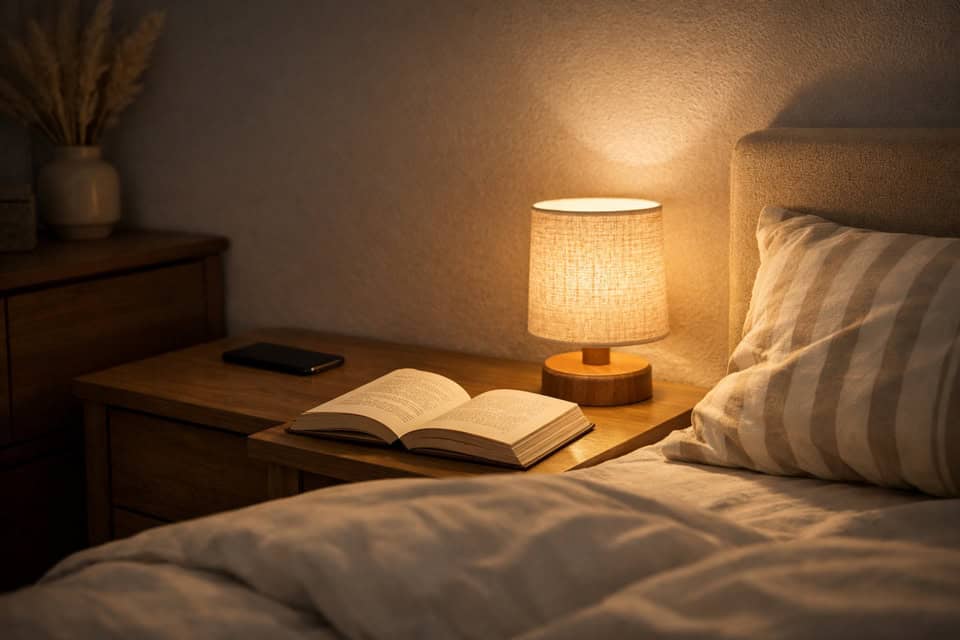
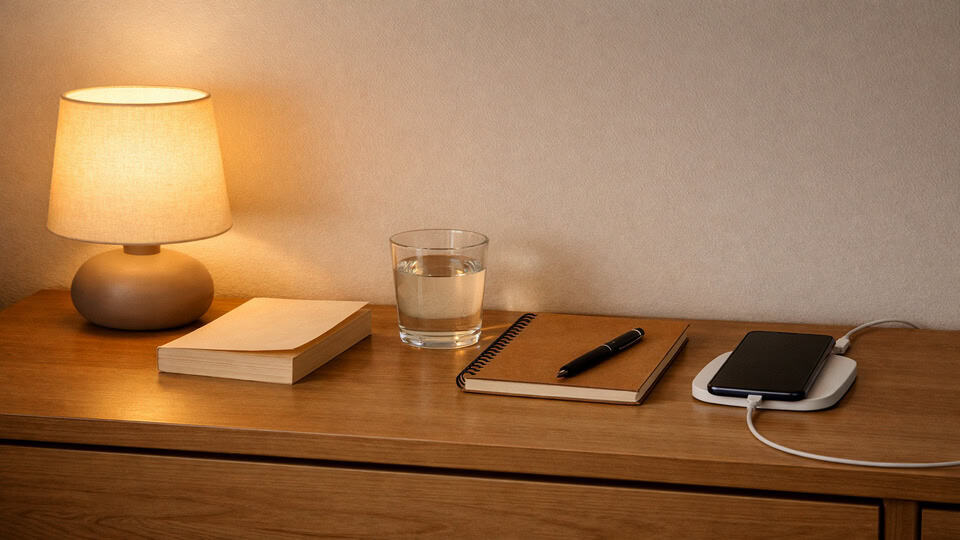
Better replacements are low-stimulation and low-friction: a paperback, gentle stretching, a short journal entry, light tidying, skincare, or simply sitting under dim light for a few minutes. None of these needs to be expensive. You do not need a special sunrise lamp, premium e-reader, or sleep gadget. A used book, a $8 notebook, and a lamp you already own can be enough.
If boredom shows up, that’s normal. If you feel a little disconnected, also normal. Late-night scrolling often acts like a tiny emotional buffer. Expect some friction in the first few nights instead of reading that discomfort as proof the habit “doesn’t work.”
Choose the Version That Fits Your Life, Not Someone Else’s
There are a few workable models, and the best one depends on why you use screens at night. If you’re a heavy phone scroller who loses track of time, a structured cutoff is usually best. If you use screens for practical reasons, like checking a child monitor app, finishing a late shift, or coordinating caregiving, a flexible reduction may be more realistic than a strict ban.
| Option | Best For | Trade-Off |
|---|---|---|
| Strict cutoff | People who scroll for 45+ minutes and need hard boundaries | Can feel rigid or isolating at first |
| Flexible reduction | Busy adults, parents, caregivers, shift workers | Requires self-awareness and honesty |
| Screen-limited routine | People who want TV or an e-reader but less phone use | Easy to let “limited” expand over time |
| Blue light tools only | People not ready for habit change yet | Usually the weakest option on its own |
This is ideal for adults who feel stuck in a late-night loop, wake unrefreshed, or want better sleep hygiene and screens boundaries without becoming extreme. You might want to skip a strict version if your evenings are unpredictable due to work, family care, or time-zone communication. In that case, use a lighter version and protect the last 20 minutes instead.
There is one honest downside: less late-night convenience can feel surprisingly lonely. If your phone is your social wind-down, reducing it may feel like losing a familiar ritual before you feel the sleep benefit. Good habits sometimes feel worse before they feel better.
A Simple Night Routine You Can Test This Week
If you want to reduce screen time at night without overhauling your life, treat it like an experiment. Track what you do now, make one small change, and check the result after 7 to 14 days. If you miss a night, it’s not failure—it’s data.
| Step | What to Do | Realistic Version |
|---|---|---|
| Track | Note when screen use starts and stops for 3 nights | Use your phone’s screen time report |
| Set cutoff | Choose a fixed stop time before sleep | Start with a 20–30 minute screen-free buffer, not a full hour |
| Replace | Pick one calming activity | Book, stretching, journaling, shower |
| Adjust space | Dim lights and move devices away | Phone on dresser, charger across room |
| Review | Check sleep onset, wake-ups, and morning energy after 1–2 weeks | Keep what helps; tweak what doesn’t |
A 30-minute version can be simple: stop phone use, dim lights, wash up, read 10 pages, then sleep. A 60-minute version works well if you need more decompression: light chores, prep for tomorrow, stretch, then read or journal. If you want broader habit support, you might also like these realistic wellness habits and stress-reducing routines or this guide on building a balanced lifestyle in modern life.
I’d also pair this with one daytime adjustment: get outside in morning light for 5 to 10 minutes if you can. It makes your evening wind-down easier because your body clock has a clearer signal.
The Questions People Still Ask When They’re Not Fully Convinced
Is TV as bad as phones before bed?
Usually not, but it depends on brightness, distance, and content. Phones are often more disruptive because they sit close to your eyes and invite interaction, notifications, and endless switching. A calm show watched from across the room may be less activating than social media in bed, but intense TV can still delay sleep.
Do blue light glasses work?
They may reduce some light-related impact, especially for people sensitive to evening brightness, but they do not solve the stimulation problem. If your brain is engaged by work, news, gaming, or messaging, glasses won’t fully protect sleep. Think of them as a partial tool, not a free pass.
What if screens genuinely help me relax?
That can be true. The goal isn’t to argue with your experience. Instead, try changing the type, timing, or intensity of screen use. A short, calm program earlier in the evening may work better than phone use in bed. Keep the last 20 to 30 minutes quieter and see what changes.
How long before I notice a difference?
Some people notice changes within 2 to 4 nights, especially if bedtime scrolling was heavy. For others, it takes 1 to 2 weeks because stress, caffeine, and inconsistent schedules also affect sleep. Track morning energy, time to fall asleep, and how often you wake up. Those are better markers than one perfect night.
If you’re working on overall daily wellbeing, these reads can help support the same goal: improve daily life quality step by step and healthy work-life balance on a busy schedule.
Try Less Screen, Not a Perfect Life
The real value in the benefits of reducing screen time before bed is not moral purity or a flawless nighttime routine. It’s practical: slightly faster sleep, a calmer mind, fewer accidental late nights, and mornings that feel less punishing. That is a meaningful return for a small habit change.
You do not need to become a person who reads for an hour under candlelight and never checks a message after 9 p.m. You just need enough distance from the screen to let your body and mind shift gears. For many people, that starts with 20 minutes, a charger across the room, and one replacement habit that doesn’t ask your brain to keep performing.
The best night routine is the one you can repeat when you’re tired, stressed, and not feeling disciplined.
Start tonight with the smallest version
Pick one change: a 20-minute screen-free buffer, your phone off the nightstand, or a low-stimulation replacement like reading or stretching. Test it for 7 nights and pay attention to how you wake up.
Small shifts are often what make sleep feel possible again.