
How to improve daily life quality step by step without turning your life into a project
Improving daily life quality step by step starts with a surprisingly small shift: stop trying to fix everything at once. A lot of adults aren’t in full crisis — life is functioning. Bills get paid, work gets done, meals happen somehow. But the days can still feel flat, rushed, cluttered, or quietly draining. If that sounds familiar, you don’t need a dramatic reset. You need a calmer system. It asks you to notice what drains quietly before trying to refill anything.
The most reliable way to make everyday life better is to improve a few repeatable parts of it: your energy, your environment, your time, and the habits that hold those together. I’ve tried the “new month, new me” version before, and honestly, it made me tired by day four. What worked better were smaller, sustainable upgrades that fit real life — including busy weeks, low motivation, and the occasional kitchen counter disaster. By week three, the kitchen counter disaster recovery time had quietly halved.
A clear starting point when life feels okay but not good
Daily life quality is not a vague wellness slogan. It usually comes down to a few practical questions: Do you wake up with enough energy to function? Does your home help you relax or add stress? Do your days have any breathing room? Do your routines support your body and mind, or do they quietly wear you down? The hardest question is the last one, because routines rarely announce they are wearing you down.
Research from Harvard Health and Mayo Clinic Health System points in the same direction: lasting change works better when it is specific, realistic, and tied to daily behavior rather than motivation spikes. That matches what many of us learn the hard way. The habits that improve life are usually unglamorous: sleep timing, movement, social contact, clutter control, spending awareness, and a little margin in the day. The trade-off is real: you trade the thrill of a new system for the quiet return of steady days.
If you want a practical formula, use this: assess your current friction, pick one high-impact area, make the habit tiny, and review weekly. That is the backbone of a realistic step by step life improvement plan that does not collapse the first time work gets hectic. The formula sounds almost too simple to work, which is exactly why it does.
Why small upgrades matter more than dramatic resets
Most of life is repeated. That is why small habits matter so much. A 10-minute evening reset, a consistent bedtime window, a packed lunch twice a week, or a daily walk after work can change how your week feels more than a big burst of effort on Sunday. According to Healthline’s evidence-based happiness guide, sleep, movement, gratitude, social connection, and time outside all have measurable effects on mood and wellbeing. None of those require a personality transplant. The hard part is not the habit itself — it is trusting that something so small can actually move the needle.
There’s a direct link between your environment and your mental state. A cluttered sink, loud notifications, unpaid bills on the counter, and no easy food options can create a low-level buzzing stress that follows you all day. I notice it in my own home: when surfaces are clear and tomorrow’s basics are ready, the apartment feels quieter, even before anything “big” changes. The apartment asks for ten minutes of attention, not a full reset.
The catch is trade-offs. Convenience can cost money. Healthy choices take planning. Saving time can mean spending more. Sustainable lifestyle habits for wellbeing work best when you make those trade-offs visible instead of pretending they don’t exist. Better days are often built from simple exchanges: 15 minutes of prep to save 45 minutes later, or $20 on a water bottle and lunch container to avoid five $12 takeout lunches. The math is straightforward — the hard part is choosing to do it.
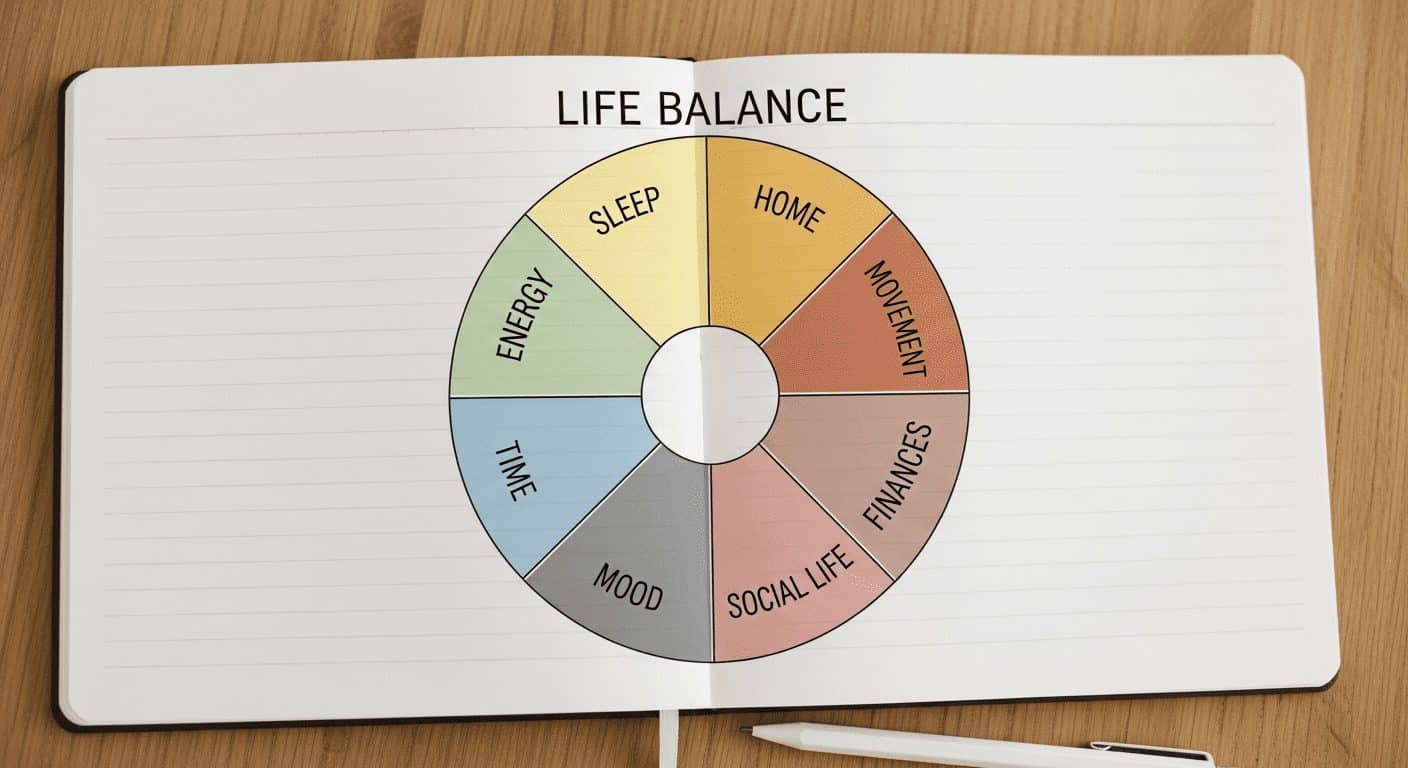
[IMAGE: a calm desk scene with a printed life balance wheel labeled energy, sleep, home, time, mood, social life, finances, and movement] The calm desk is the setup, not the outcome.
A quick framework to reduce overwhelm
When you are tired, even good advice can feel like too much. This table helps you spot the highest-return starting points across the areas that shape daily life quality. The table works best when you ignore most of it.
| Domain | Quick win | Cost | Effort | Expected impact |
|---|---|---|---|---|
| Physical | 10-minute walk after one meal | Free | Low | High ROI for energy and mood |
| Mental | 5-minute brain dump before bed | Free | Low | Moderate to high for stress |
| Home | 10-minute nightly reset | Free | Low | High for calm and function |
| Time | Choose top 3 tasks each morning | Free | Low | High for mental load |
| Social | One check-in text or call weekly | Free | Low | Moderate but meaningful |
| Financial | Track spending for 7 days | Free | Low | High if money stress is active |
| Environmental | Reusable basics + meal planning | Low to moderate | Medium | Slow but steady savings and waste reduction |
Highest ROI habits for most people: sleep consistency, walking, home reset, and reducing decision clutter. If you need support building these, see Ultimate Guide to Building Sustainable Daily Habits and How to Stay Consistent With Habits Without Burnout. These four habits ask for consistency, not intensity — the real work is showing up, not doing more.
How to improve daily life quality step by step in messy real life
Start with a self-check, not a fantasy routine
Take 10 minutes and score these from 1 to 5: energy, sleep, stress, time pressure, home clutter, food quality, movement, finances, and connection. Do not overthink it. You are not diagnosing your life; you are finding friction. If two categories are clearly lower than the rest, that is your starting point. The exercise asks for ten minutes of honesty, not a full life audit — just enough to see where the friction lives.
Choose one or two priority areas
This is where many people go wrong. I did too. I once tried to improve my diet, sleep, exercise, productivity, and budget in the same week. By the second weekend, I was eating toast over the sink and ignoring every tracker I had created. Pick one area that affects many others. Sleep often improves mood, food choices, and patience. Home order often improves mornings. Finances can reduce background stress fast.
Use the minimum effective habit
Instead of “work out daily,” try “walk for 10 minutes after lunch.” Instead of “be more organized,” try “reset kitchen and entryway for 10 minutes.” Instead of “eat healthier,” try “add one protein-and-fiber breakfast three times this week.” This is how healthy daily routines for better living actually stick. These micro wellness habits are much easier to maintain than trying to overhaul your entire life at once.
Stack habits onto what already happens
Habit stacking works because it uses existing momentum. After coffee, fill your water bottle. After brushing your teeth, do two minutes of stretching. After dinner, take a short walk or do the kitchen reset. If mornings are chaos, stop forcing a morning routine just because it looks good online. Your best routine is the one that survives a Tuesday.
Make the environment do part of the work
Put fruit where you see it. Keep chargers out of the bedroom if screens ruin sleep. Store donation bags in a closet so decluttering is easier. Leave walking shoes by the door. My own follow-through improved when I stopped relying on willpower and started changing what was visible and easy. For home support, see Decluttering Your Home for Mental Clarity.
Track loosely and adjust for your actual schedule
Use a paper checklist, notes app, or simple calendar marks. No need for a color-coded dashboard. If you work a 9–5, anchor habits to morning, lunch, and evening. If you do shift work, anchor habits to wake time, first meal, and pre-sleep instead of clock time. That difference matters. A parent with fragmented evenings, a nurse on rotating shifts, and a remote worker will not use the same routine shape, and that is fine.
What helps, what backfires, and what to expect
The biggest mistake is the full life overhaul. It feels productive for about 48 hours. Then real life shows up. Another common mistake is copying rigid routines from people whose circumstances are completely different from yours. If someone has no caregiving load, works from home, and loves early mornings, their 5:30 a.m. routine is not a moral achievement. It is just a different setup.
Expect inconsistency. You will miss days. Motivation will dip. A child will get sick, work will run late, or your energy will tank. The goal is not never breaking the chain. The goal is shortening the gap before you restart. That mindset matters even more for people with chronic illness, variable pain, depression, or caregiving strain. On those weeks, the habit may need to shrink to its easiest version: 2 minutes of stretching, one load of laundry, one homemade meal, one text to a friend.
If your life is highly unpredictable, use “if-then” plans. If my shift ends late, then I do a 5-minute reset instead of 20. If I cannot walk outside, then I do 50 steps around the apartment while the kettle boils. This is how realistic self improvement habits stay realistic.
Choosing the best starting strategy for your life
There are three common ways to build simple daily life improvements: habit stacking, routine blocks, and environment design. None is universally best. The right one depends on your energy, schedule, and tolerance for structure.
| Approach | Best for | Upside | Downside |
|---|---|---|---|
| Habit stacking | Busy people with existing routines | Easy to remember, low effort | Falls apart if anchor routine changes |
| Routine blocks | People who like structure | Creates rhythm and momentum | Can feel rigid and fail on chaotic days |
| Environment design | Low-motivation or high-stress periods | Reduces reliance on willpower | Slower setup and less exciting than a dramatic reset |
That last downside is real. Sustainable changes are slower and may feel less thrilling than a total reset. But they usually last longer. My default recommendation is this: start with the easiest high-impact habit. For many people, that is a 10-minute walk, a fixed bedtime window, or a nightly home reset.
Cost matters too. Low-cost improvements include walking, sleep consistency, decluttering, meal planning, and spending reviews. Convenience-based improvements may cost more but save energy: grocery delivery fees of $8 to $15, a $25 meal-prep container set, or a $40 lamp timer for gentler evenings. If money stress is part of the problem, start with free habits first, then explore Budget-Friendly Wellness Habits That Save Money.
This approach is ideal for adults who want steady improvement without burnout. You might want to skip it, or adapt it with professional support, if you are dealing with severe depression, acute crisis, or medical symptoms that need direct care rather than habit tweaks alone.
A four-week plan you can actually follow
If you want a practical rhythm, use this month-long checklist. It is intentionally modest.
| Week | Focus | Checklist |
|---|---|---|
| Week 1 | Life audit + one habit | Score 9 life areas, pick 1 priority, choose a 5 to 10 minute habit, define your anchor |
| Week 2 | Stabilize + remove friction | Prepare tools, adjust environment, track 4 to 5 days, shrink habit if needed |
| Week 3 | Add a second improvement | Only if week 1 habit feels stable; add one complementary habit such as sleep or home reset |
| Week 4 | Review and adjust | Ask: What helped? What felt annoying? What saved time or money? Keep, drop, or simplify |
For your weekly review, use three questions only:
- What made life feel 10% easier this week?
- What created the most friction?
- What is the smallest adjustment for next week?
If you want more structure around mornings, pair this plan with How to Create a Simple Morning Routine That Actually Works. If habit consistency is the bigger issue, revisit How to Stay Consistent With Habits Without Burnout.
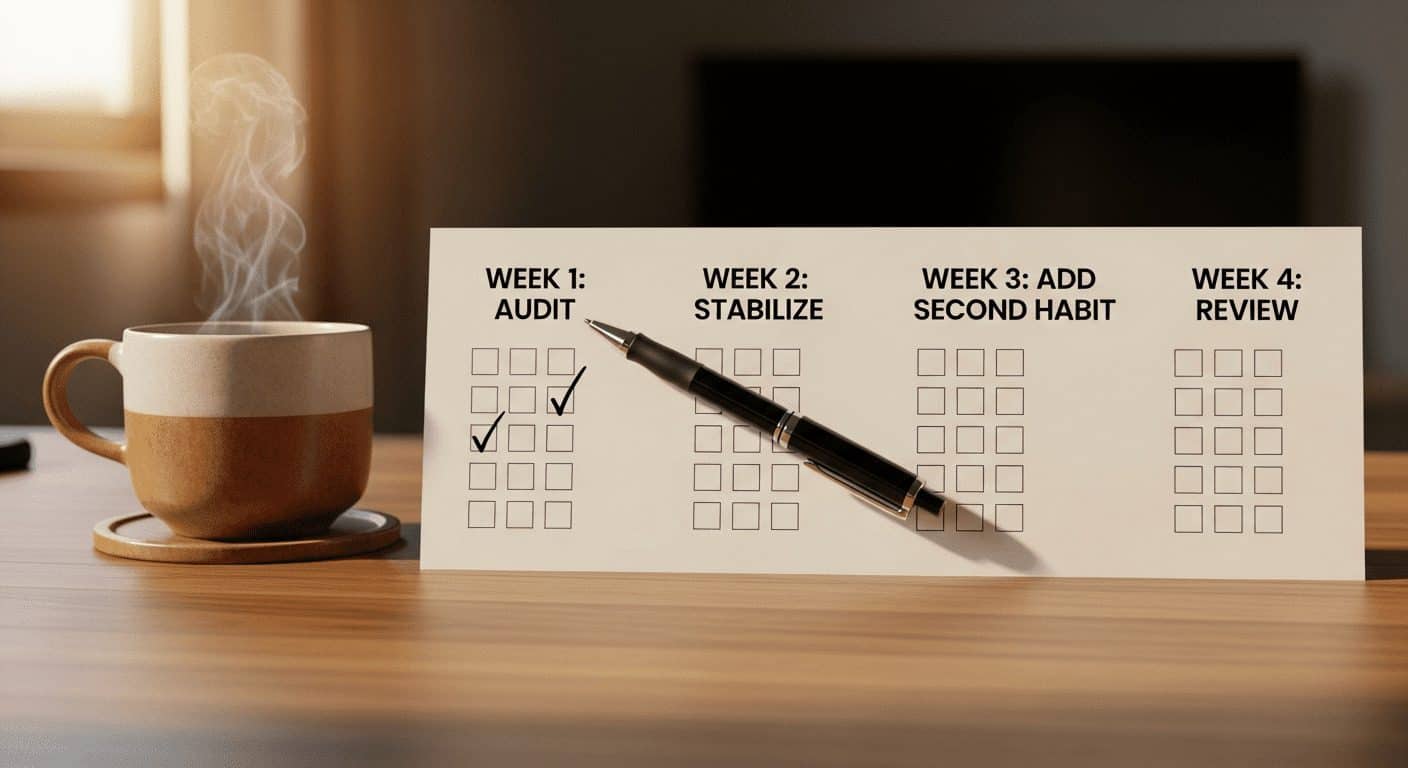
[IMAGE: a simple 4-week checklist on a desk with checkboxes, pen, tea mug, and a calm home workspace]
Related TheLife Nexus Guides
Questions people usually ask before they start
How long until I feel better?
Some habits help within days. A 10-minute walk, better hydration, or a tidier evening space can improve mood and reduce friction quickly. Bigger changes like sleep repair, financial calm, or stronger routines usually take a few weeks. In my experience, the first sign of progress is not dramatic happiness. It is that the day feels slightly less jagged.
What if I fail or stop?
Then you restart smaller. Stopping does not mean the method failed. It usually means the habit was too big, badly timed, or unsupported by your environment. Reduce it to the easiest version and attach it to a stronger anchor. This is normal, especially during stressful seasons.
What if my schedule is unpredictable?
Use flexible anchors instead of fixed times. Tie habits to wake-up, first meal, commute, or pre-sleep. Keep backup versions ready: 2-minute stretch, 5-minute tidy, one prepared snack, one spending check. Unpredictable schedules need portable habits, not perfect routines.
Who is this approach best for?
It is best for adults who want realistic, low-pressure improvement across health, home, time, and mindset. It works especially well if you dislike hustle culture and want sustainable progress. It is not a substitute for medical or mental health treatment when symptoms are severe, persistent, or urgent.
Official and External Resources
Start smaller than you think, and let the days improve from there
If your life feels functional but not very nourishing, that does not mean you need a total reinvention. It usually means a few parts of daily life need less friction and more support. The most effective improve quality of life habits are often simple: sleep a bit more consistently, move your body a little, make your home easier to live in, and reduce the number of decisions you face when tired.
So start with one thing today. Not five. Maybe it is a 10-minute walk. Maybe it is clearing the kitchen before bed. Maybe it is writing down tomorrow’s top three tasks. Small changes are less dramatic, yes. They are also much more likely to still be helping you a month from now.
If you want the next step, build your first habit using Ultimate Guide to Building Sustainable Daily Habits, then shape it around your mornings with How to Create a Simple Morning Routine That Actually Works. Better daily life is rarely built in one leap. It is built in repeatable, ordinary moments. That is good news, because ordinary moments are available today.
Pick one 10-minute upgrade block today
Choose the easiest high-impact habit, do it for one week, and review without judging yourself. That is enough to begin.