Mental Health Tracking with Wearables: What Works
Mental health tracking with wearables sounds simple: wear a watch, get a stress score, understand your mind. The reality is more useful than that claim in some ways, and far less magical in others. I’ve tested stress and recovery scores myself, and the first lesson was humbling: my watch was often picking up body signals, not my actual emotional story. It rewards the patience to sit with the numbers and ask what your body was actually doing.
Smartwatches, rings, and recovery bands now promise insight into stress, sleep, mood, and resilience. These health monitoring devices use a variety of sensors to collect data on your body’s physiological responses. That promise is appealing, especially when you feel run down and numbers seem more trustworthy than your own foggy guess. But these devices do not read thoughts, diagnose anxiety, or confirm depression. They track physical signals and use algorithms to infer what may be happening. The numbers feel solid, but the story behind them is still yours to write.
If you want the short answer: wearables can be genuinely helpful for spotting patterns in stress, sleep, and recovery, but they are not direct mental health measurement tools. Used well, they can support better decisions. Used poorly, they can make you second-guess yourself. The trade-off is simple: better awareness for a little more mental overhead.
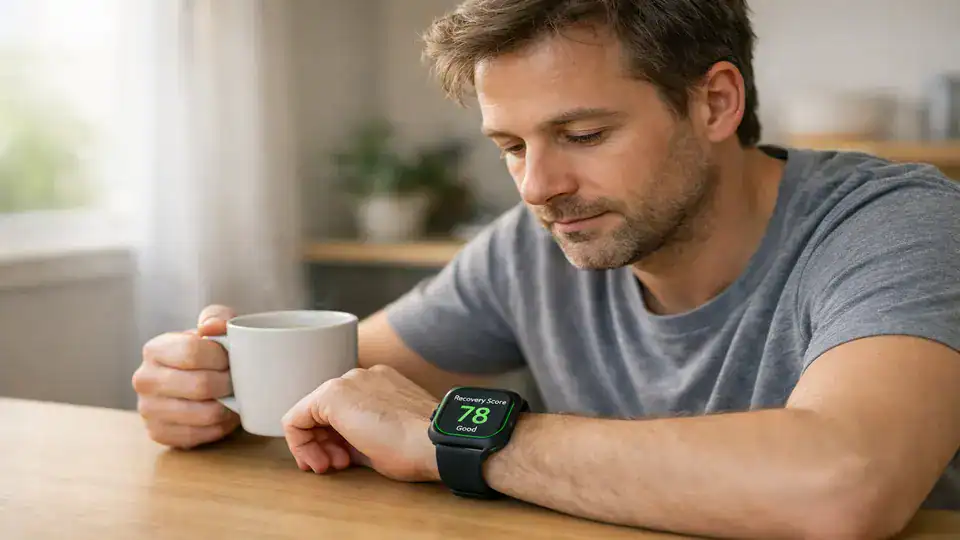
Quick Summary: Helpful, but Only If You Use It Right
- Wearables measure body signals like heart rate, HRV, sleep duration, movement, and sometimes skin temperature.
- They infer stress and mood; they do not directly measure mental health conditions.
- The best value is trend awareness, especially around sleep consistency, recovery, and stress load over time.
- Daily scores can be noisy because illness, alcohol, medication, shift work, and hard training can distort the data.
- Some people benefit a lot; others become more anxious from constant checking.
- Privacy matters because sensitive behavioral and physiological data can reveal more than most users realize.
What Wearables Can Really Tell You in Daily Life
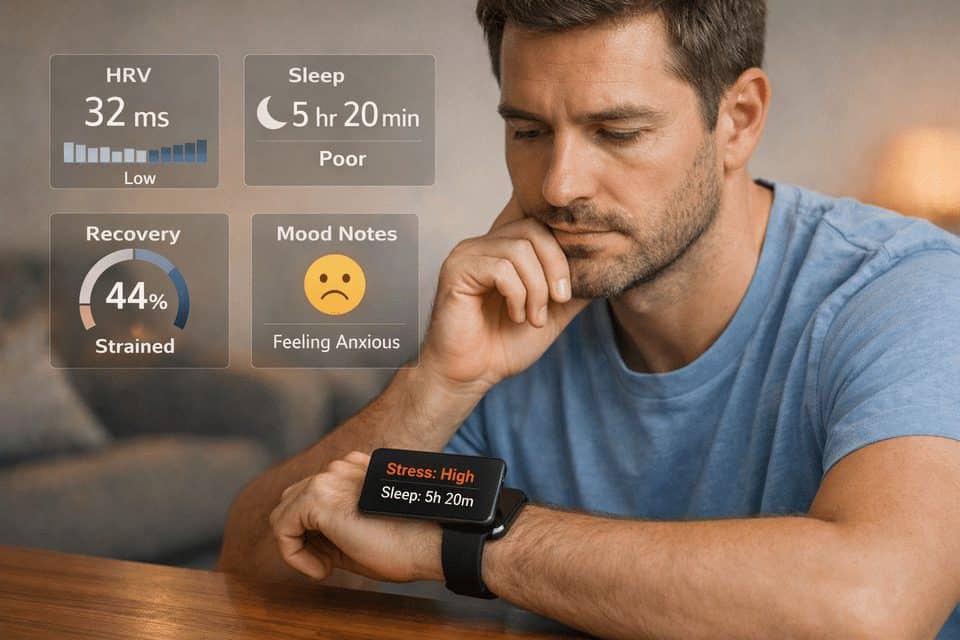
The most useful framing is this: wearables are pattern detectors, not mental health authorities. They collect physiological data continuously, which is something most people could never do manually. A watch can notice your resting heart rate is elevated for three mornings in a row, your sleep has shortened by 70 minutes per night, and your HRV has dropped below your normal range. That cluster can be meaningful. The real insight isn’t in any single metric — it’s in the pattern across three mornings.
What it cannot do is explain why with confidence. Maybe you are stressed. Maybe you are getting sick. Maybe you had drinks with dinner, started a new medication, worked a night shift, or did a brutal leg workout. I’ve seen my own recovery score tank after travel and poor sleep when my mood was actually fine. That’s why these tools are best for asking better questions, not delivering final answers.
Impactful truth: A stress score can be a clue, but it should never become a verdict.
For broader context on integrating data across platforms, see this guide to syncing wellness data across devices. And if you are comparing tech-based mental wellness tools more generally, this look at AI mental health chatbots vs real therapy is worth reading too.
Why So Many People Want Numbers for Stress, Mood, and Sleep
There’s a reason wearables for mental health monitoring have moved from niche biohacking to mainstream wellness. More adults are dealing with burnout, fragmented sleep, low-grade anxiety, and the strange feeling of being “on” all the time. When your days blur together, passive tracking feels attractive because it promises objectivity without effort.
That appeal is easy to understand. If you wake up groggy, feel wired by 3 p.m., and can’t tell whether it’s stress, overtraining, poor sleep, or too much caffeine, a device that quietly tracks your body 24/7 sounds reassuring. I get it. I’ve had weeks where my own memory of how I slept was less reliable than the data trend in front of me.
The shift in the market reflects this. Devices that once focused mainly on steps and calories now emphasize recovery, readiness, resilience, and sleep tracking for mental wellness. Clinical and therapy-adjacent organizations have also been exploring how wearables may support care, though not replace it. For a clinical perspective, Ensora Health discusses how wearable data can complement behavioral health work. For a practical wellbeing angle, the Resilience Institute has written about wearables as tools for awareness and resilience building.
What Your Device Measures vs What It Guesses
| Metric | What it measures | Mental health link | Reliability |
|---|---|---|---|
| HRV | Variation between heartbeats | Proxy for stress load and recovery balance | Useful for trends; highly individual |
| Resting heart rate | Baseline pulse at rest | Can rise with stress, illness, poor sleep | Fairly solid if worn consistently |
| Sleep duration | Estimated time asleep | Strong link to mood and resilience | Usually more reliable than sleep stages |
| Sleep stages | Estimated REM, light, deep sleep | Useful directionally, not precise | Moderate to weak for exact stage accuracy |
| Skin temperature | Peripheral temperature changes | May reflect illness, cycle changes, recovery strain | Supportive signal, not standalone |
| Activity / movement | Steps, workouts, sedentary time | Can correlate with mood and energy | Good for broad behavior patterns |
This distinction matters because many users confuse a measured signal with an interpreted state. HRV is measured; “you are stressed” is inferred. That gap is where both the value and the risk live. The risk isn’t that the data is wrong — it’s that the interpretation feels right when it isn’t.
How Mental Health Tracking with Wearables Actually Works
HRV and mental health wearables get the most attention because HRV can reflect how your autonomic nervous system is responding to load. In plain language, lower-than-usual HRV can suggest your body is under strain. That strain may come from emotional stress, poor sleep, alcohol, hard exercise, illness, jet lag, medication changes, or all of the above. This is why HRV is best used against your own baseline, not someone else’s score. A low HRV morning feels like a fog that the numbers only confirm.
Stress tracking wearable devices often combine HRV, heart rate, skin temperature, movement, and sometimes breathing patterns into a single stress or readiness score. That score can be convenient, but convenience hides complexity. I found the single-number format useful on busy weeks, yet also misleading when it flattened too many variables into one label.
Sleep tracking for mental wellness is often more practical than stress scores because sleep duration and consistency are easier to act on. If your bedtime shifts by two hours most nights and your total sleep keeps falling under 6.5 hours, that trend is meaningful even if the REM estimate is off. Sleep stages are fascinating, but they are not the strongest reason to buy a device.
Mood tracking with smartwatches works best when it includes manual input. Passive data alone can’t tell whether elevated heart rate came from a tense meeting, excitement, or climbing stairs with groceries. A 10-second mood check-in creates context. That’s one reason some people still benefit from dedicated mindfulness tools; if that interests you, compare options with this overview of meditation headbands and brain sensors.
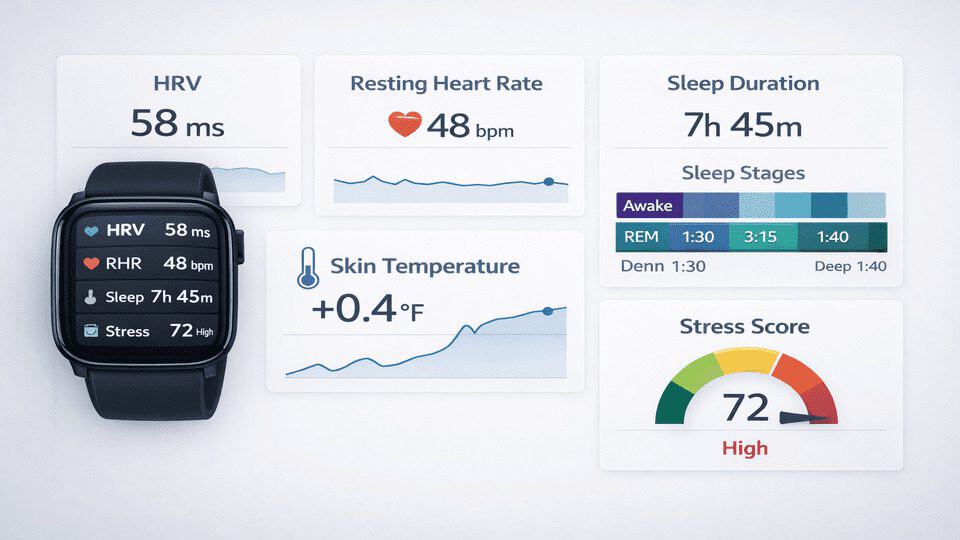
The best wearable metrics for stress and recovery are usually the least flashy: HRV trend, resting heart rate trend, total sleep time, sleep consistency, and daytime activity level. Skin temperature can help as a secondary clue. Exact sleep-stage percentages and dramatic daily readiness labels are usually less actionable.
Cost also changes the equation. A basic fitness tracker may cost around $80 to $150 with no subscription. Mainstream smartwatches often sit around $250 to $500. Recovery-focused wearables such as rings or bands can run $250 to $400 upfront, and some add $6 to $30 per month in subscription fees. Over two years, that can turn a $300 device into a $450 to $1,020 commitment. That’s not trivial.
Impactful reality check: The more polished the score looks, the easier it is to forget how messy the body is underneath it.
How to Avoid the Most Common Mistakes and Anxiety Traps
The first mistake is treating wearable outputs like diagnoses. A stress alert is not proof that you are psychologically unwell. A low HRV morning is not evidence that your coping skills failed. According to GoodTherapy, health data can sometimes increase anxiety in people who are already prone to hypervigilance. I’ve felt that pull myself: the urge to check again, compare again, search for reassurance in another graph.
The second mistake is overreacting to one bad day. Trends matter more than spikes. If your resting heart rate jumps for one night after a late meal and poor sleep, that is noise. If it stays elevated for a week while your sleep falls apart and your mood worsens, that is a pattern worth respecting.
My own dumb mistake was trusting a “low recovery” score too literally and skipping a workout I actually felt ready for. By the afternoon I realized I was fine; I’d just eaten badly, slept in a hot room, and let the app override my body sense. That was a useful lesson. Use the data as input, not command.
Privacy concerns with mental health wearables deserve more attention too. These devices can collect sleep timing, movement patterns, heart data, cycle-related signals, and behavior rhythms that reveal a lot about your life. Before buying, read the privacy policy, check whether data is sold or shared, and see what deletion controls exist. If you’re already managing multiple apps, this article on syncing wellness data across devices can help you think through ecosystem trade-offs.
Which Type of Wearable Makes Sense for You—Or None at All
If you want convenience, a smartwatch is usually the easiest entry point. You get notifications, workouts, sleep estimates, and some stress features in one device. The trade-off is battery life and often a shallower recovery picture. The convenience sells the device, but the battery reminder sells the upgrade.
Fitness trackers are simpler and often more comfortable for sleep. They usually cost less and last longer between charges, but the app experience can feel basic. For many people, that’s actually a benefit because less data can mean less overthinking.
Dedicated recovery devices like rings or subscription-based bands often go deeper on HRV, sleep consistency, and readiness. If you love pattern analysis, they can be excellent. The honest downside is ongoing subscription costs and the mental fatigue of constant tracking. After a few months, some users stop learning and start just monitoring.
This is ideal for: people who like habit-building, can look at trends calmly, and want help connecting sleep, stress, workouts, and routine. You might want to skip this if: you already feel anxious about health metrics, tend toward obsessive checking, or want a device to tell you exactly how you feel. If your main need is emotional support rather than data, tools and services beyond wearables may be more useful; see this comparison of AI chatbots and real therapy for a more human-support lens.
Impactful advice: The best wearable is the one that changes one behavior you care about—not the one with the most graphs.
A Simple Plan to Use Wearable Data Without Letting It Run Your Life
| Step | What to do | Why it helps |
|---|---|---|
| Choose 1–2 metrics | Start with HRV trend and sleep consistency | Reduces overwhelm |
| Track 2–3 weeks | Wear it consistently before changing habits | Builds a personal baseline |
| Log context | Note caffeine, alcohol, workouts, travel, illness, stress | Explains data swings |
| Make one small change | Example: fixed bedtime 5 nights a week | Lets you see cause and effect |
| Review monthly | Ignore random daily drama | Keeps focus on trends |
| Pair with mood note | Write a 30-second daily mood note | Adds human context to the numbers |
This is the approach I wish I had started with. Instead of trying to decode every metric, I now focus on two anchors: sleep regularity and HRV trend. Then I compare them against real life. Did I have two late coffees? Did I work out hard? Was I tense all day? That process is simple enough to stick with, which matters more than squeezing meaning from every chart. The real insight comes from the questions you ask yourself, not the chart.
If you want to build a broader personal system around your data, syncing wellness data across devices can make monthly review easier.
Frequently Asked Questions
Can wearables detect anxiety or depression?
Not directly. Wearables can detect physiological patterns that may correlate with stress, poor sleep, low recovery, or reduced activity. Those can overlap with anxiety or depression, but they are not the same thing. A device can suggest that your body is under strain; it cannot diagnose a mental health condition.
Are HRV scores accurate enough to trust?
They are useful when measured consistently and interpreted against your own baseline. HRV is not a universal “good or bad” number. It changes with age, fitness, sleep, alcohol, illness, medication, and stress. Trust the trend more than the single reading, and avoid comparing your score to someone else’s.
What if wearable data makes me more anxious?
That’s a valid reason to scale back or stop. Limit checks to once daily, turn off nonessential alerts, and focus on one or two trends instead of all metrics. If the device is making you feel watched, judged, or compulsive, it may be hurting more than helping.
Are these devices safe for long-term use?
For most adults, consumer wearables are generally safe for long-term everyday use, but the bigger issue is psychological rather than physical. Long-term tracking can create dependence on scores or constant self-monitoring. The healthiest approach is periodic review, not endless checking.
The Balanced Take: Use the Data, Don’t Hand It the Wheel
Mental health tracking with wearables is worth trying if you want better awareness of your stress, sleep, and recovery patterns—and if you can keep the data in its place. These devices are strongest when they help you notice trends you would otherwise miss: shorter sleep, rising resting heart rate, falling HRV, less movement, rougher recovery after certain routines. The real ask is not more data but the discipline to look at it once a month and actually change something.
They are weakest when you ask them to interpret your emotional life with certainty. That’s not a failure of the technology so much as a mismatch between what is measured and what is lived. Your body leaves clues. It does not hand over a perfect explanation.
Final sentence that matters: The smartest way to use a wearable is to let it sharpen your self-awareness, not replace it.
Want a Better Wellness Tech Setup?
If you decide to experiment, keep it simple: one device, two metrics, one monthly review habit. Then build from there.
Read next:
Sync wellness data across devices, Best meditation headbands and brain sensors, and AI mental health chatbots vs real therapy.