Best wearable heart rate monitors: stop buying the wrong one
The best wearable heart rate monitors aren’t all built for the same job, and I learned that the hard way. I assumed my smartwatch was giving me solid numbers until a tough HIIT session produced readings that lagged so badly I could feel my breathing surge while the screen still showed a calm zone. That gap matters more than most buyers expect. The real choice isn’t just brand versus brand. It’s convenience versus accuracy, plus comfort, battery life, and whether you want data for workouts, recovery, or all-day wellness. The screen lags behind your lungs, and that lag is exactly where the real decision lives.
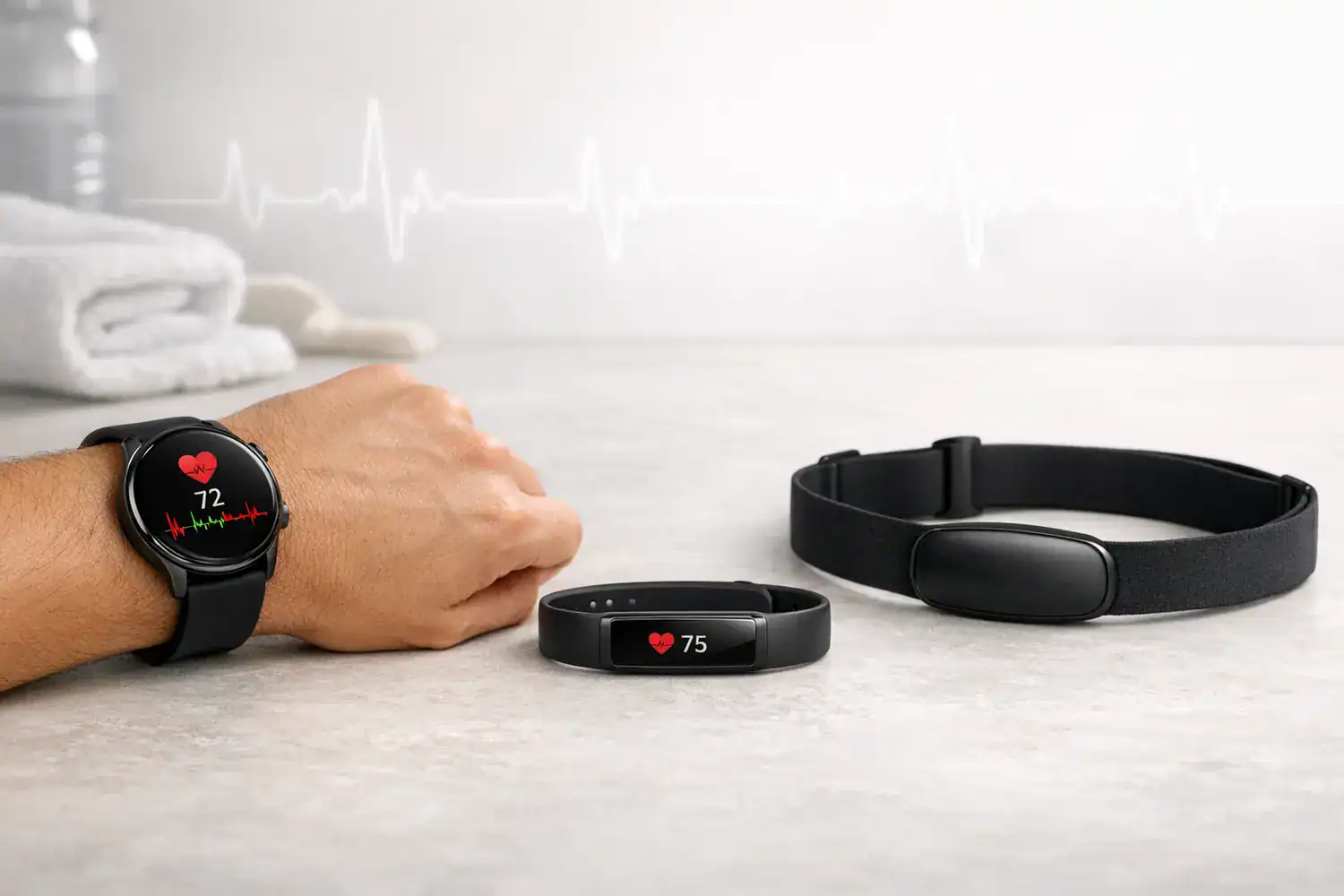
If you want one device for daily life, notifications, sleep, and decent exercise data, a smartwatch is usually the best overall pick. If you care most about training accuracy—especially for intervals, cycling, or strength work—a chest strap is still the most accurate wearable heart rate monitor type. If you want lower cost and simple all-day tracking, a fitness band often gives the best value. You get more precision with the strap, but you give up the seamless daily carry of a watch.
Quick Summary
- Best overall for most people: a smartwatch with reliable optical sensors and a strong app ecosystem.
- Best accuracy: chest straps, especially for HIIT, cycling, rowing, and strength sessions with wrist movement.
- Best value: fitness bands in the $40 to $100 range for everyday heart rate, sleep, and step tracking.
- Best for all-day comfort: lightweight continuous heart rate monitor wearables with long battery life.
- Big mistake to avoid: assuming all wrist-based devices are equally accurate during intense workouts.
If you are in decision mode, here is the short answer: buy a smartwatch if you want one device for everyday use, buy a chest strap if workout precision matters, and buy a band if you mainly want affordable wellness tracking. There is no perfect device, only the right compromise for how you actually train and live.
Why this choice affects your workouts more than you think
Heart rate data is not just a nice dashboard number. It shapes how you pace easy runs, how you judge recovery, and how you estimate calorie burn or training load. If your device reads low during hard efforts, you may push too hard trying to “reach the zone.” If it reads high during easy sessions, you may back off when your body is actually fine. Bad data quietly leads to bad decisions.
That matters because many people now use wearables for more than exercise. Continuous heart rate monitor wearables feed into stress scores, sleep tracking, readiness estimates, and recovery trends. Garmin’s health science resources explain how heart rate, HRV, sleep, and activity metrics work together in consumer wearables, while Apple has published technical information on how its watch measures heart rate using optical sensors and, in some models, electrical signals for ECG-related functions. Those are useful advances, but they are still not the same as medical monitoring. See Garmin Health Science and Apple’s heart rate overview for the technical background.
I have also seen the more subtle problem: thinking I was in a fat-burn zone on a wrist tracker during a treadmill interval block, when my effort level clearly said otherwise. It sounds minor, but if you repeat that mistake for months, your training plan slowly drifts off course.
A practical comparison before you spend anything
| Type | Accuracy | Comfort | Battery | Typical Price | Best Use |
|---|---|---|---|---|---|
| Smartwatch | Good to very good at steady effort; weaker in intervals | High for daily wear | 1 to 14 days depending on model | $199 to $999 | Everyday use, running, sleep, smart features |
| Fitness band | Decent for daily trends; mixed for hard training | Very high | 5 to 14 days | $40 to $150 | Budget wellness tracking, sleep, steps |
| Chest strap | Best for exercise accuracy | Lower for all-day wear | Months to a year on replaceable battery, or rechargeable | $60 to $160 | HIIT, cycling, rowing, precise zone training |
In plain language, optical heart rate monitor accuracy is usually good enough for steady walking, easy runs, and daily wellness. Electrical contact sensors, like chest straps, react faster and tend to stay more reliable when movement gets messy. That is why the chest strap vs wrist heart rate monitor debate never really goes away. The first mile reads fine on the wrist — the sprints are where the strap earns its keep.
The best wearable heart rate monitors by device type
If you are comparing categories first, this is the part that usually saves the most money. A lot of buyers start with brand loyalty, but the smarter move is to decide which type of sensor and form factor fits your real routine.
Smartwatches: the best heart rate monitor watch for most people
Smartwatches are the easiest recommendation for general use because they combine heart rate tracking with sleep, notifications, GPS, and app support. Apple Watch, Garmin watches, and Samsung Galaxy Watch models are the main names most shoppers compare. In a heart rate monitor smartwatch comparison, Apple tends to be strong for iPhone users and health integration, Garmin stands out for training tools and battery life, and Samsung fits Android users who want a more phone-like experience on the wrist.
The honest trade-off is that wrist sensors can lag during sharp intensity changes. During a steady 5K run, my watch usually looks sensible. During kettlebell circuits or sprint intervals, it can drift, spike, or respond late. That does not make it bad. It just means it is better for everyday use and mixed fitness than for precision coaching.
Fitness bands: the best fitness tracker heart rate monitor for value
Fitness bands are lighter, cheaper, and often easier to sleep in. If your budget is around $50 to $100 and you mainly want resting heart rate trends, sleep, steps, and basic workout logging, a band can be the best wearable for heart rate tracking without overspending. The downside is smaller screens, fewer training metrics, and sometimes weaker sensor consistency during intense exercise.
I often recommend bands to beginners because they reduce friction. You charge them less, notice them less, and still get useful trend data. If your goal is simply to move more and watch your resting heart rate over time, a band is often enough.
Chest straps: the most accurate wearable heart rate monitor for training
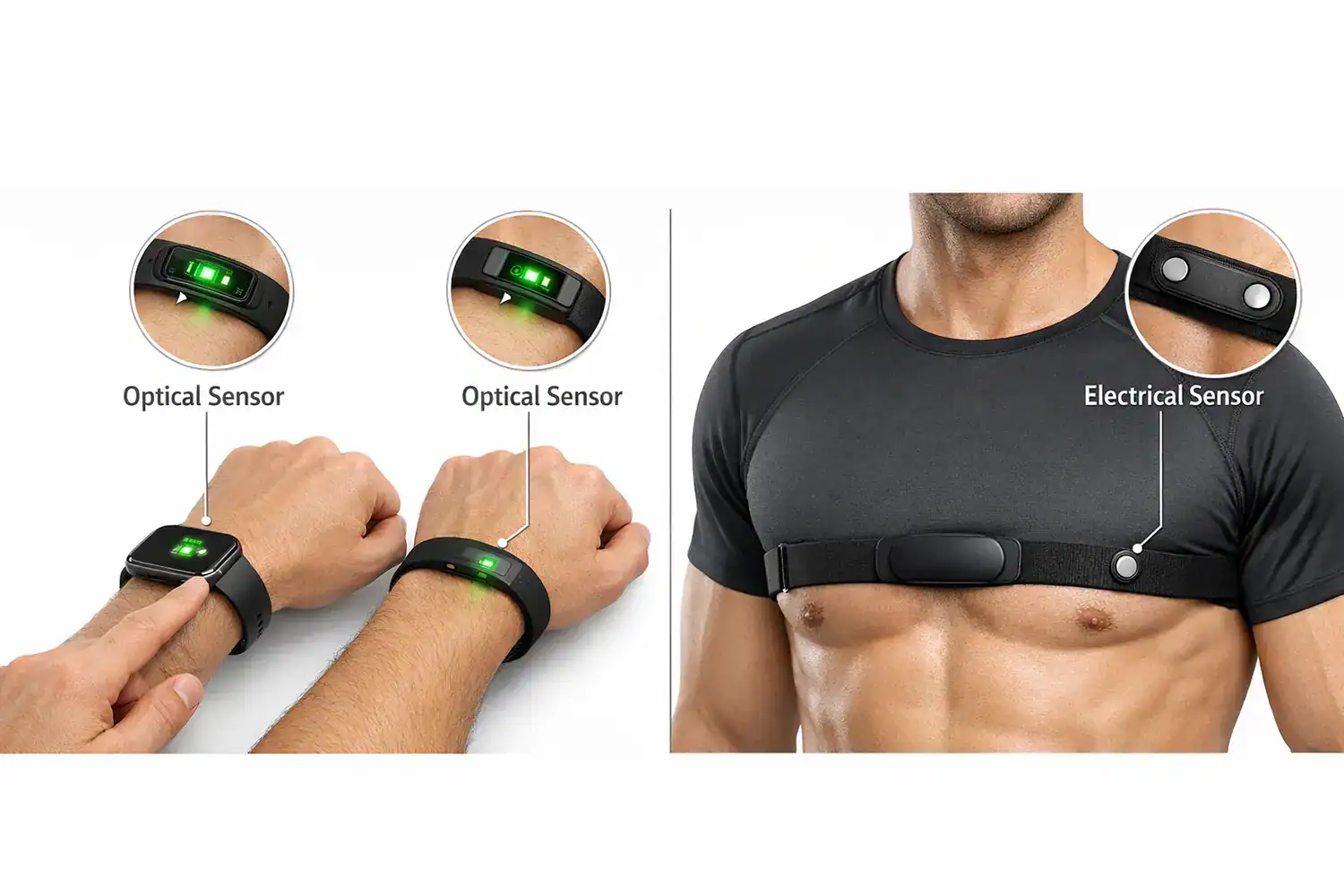
Chest straps remain the gold standard for exercise accuracy because they read electrical signals from the heart rather than estimating pulse through light and blood flow changes at the wrist. For runners doing intervals, cyclists on indoor trainers, rowers, and anyone following strict zones, this is still the benchmark. Authoritative reviews and clinical-adjacent summaries, including CLS Health’s wearable heart monitor guide, consistently note that chest straps lead when precision matters.
The downside is real. Chest straps are less comfortable, less convenient, and frankly annoying for daily wear. I use one when I care about the session, not when I am heading to lunch or tracking sleep. Accuracy gets better, convenience gets worse.
Optical vs electrical sensing, without the jargon
Wrist devices use LEDs to shine light into the skin and estimate blood flow changes. That works surprisingly well in stable conditions. Chest straps use electrodes to detect the heart’s electrical activity directly. In practice, that means optical sensors are more vulnerable to movement, loose fit, tattoos, darker ambient conditions under poor contact, and cold weather reducing blood flow. Electrical sensors are less elegant, but more dependable under stress.
If you want more context on connected health data beyond heart rate, you may also like syncing wellness data across devices and mental health tracking with wearables.
What causes bad readings, even on good devices
The most common mistake is assuming all wearables are equally accurate. They are not, and even a good device can perform badly if it is worn badly. Loose fit is the easiest way to ruin wrist readings. If the sensor shifts during push-ups, swings, or sprints, the data can become noisy fast.
Cold weather is another problem people rarely expect. On winter runs, reduced blood flow near the skin can make optical sensors struggle. I have seen my wrist reading stay oddly low for the first 10 minutes of a freezing run while my effort felt much harder. Tattoos, darker skin tones in some devices, heavy arm movement, and sweat buildup can also affect optical performance. Brands have improved, but physics still wins sometimes.
The second mistake is ignoring the software side. App ecosystems matter. Some devices export data cleanly to training apps and gym equipment. Others keep you inside their own platform. Before buying, check compatibility with your phone, your treadmill or bike computer, and any coaching app you already use. Also think about charging friction. A watch that needs charging every day sounds fine at checkout and gets annoying by week three.
Which wearable fits your actual routine
This is where the buying decision gets easier. Think less about “best overall” and more about your most repeated use case.
For running
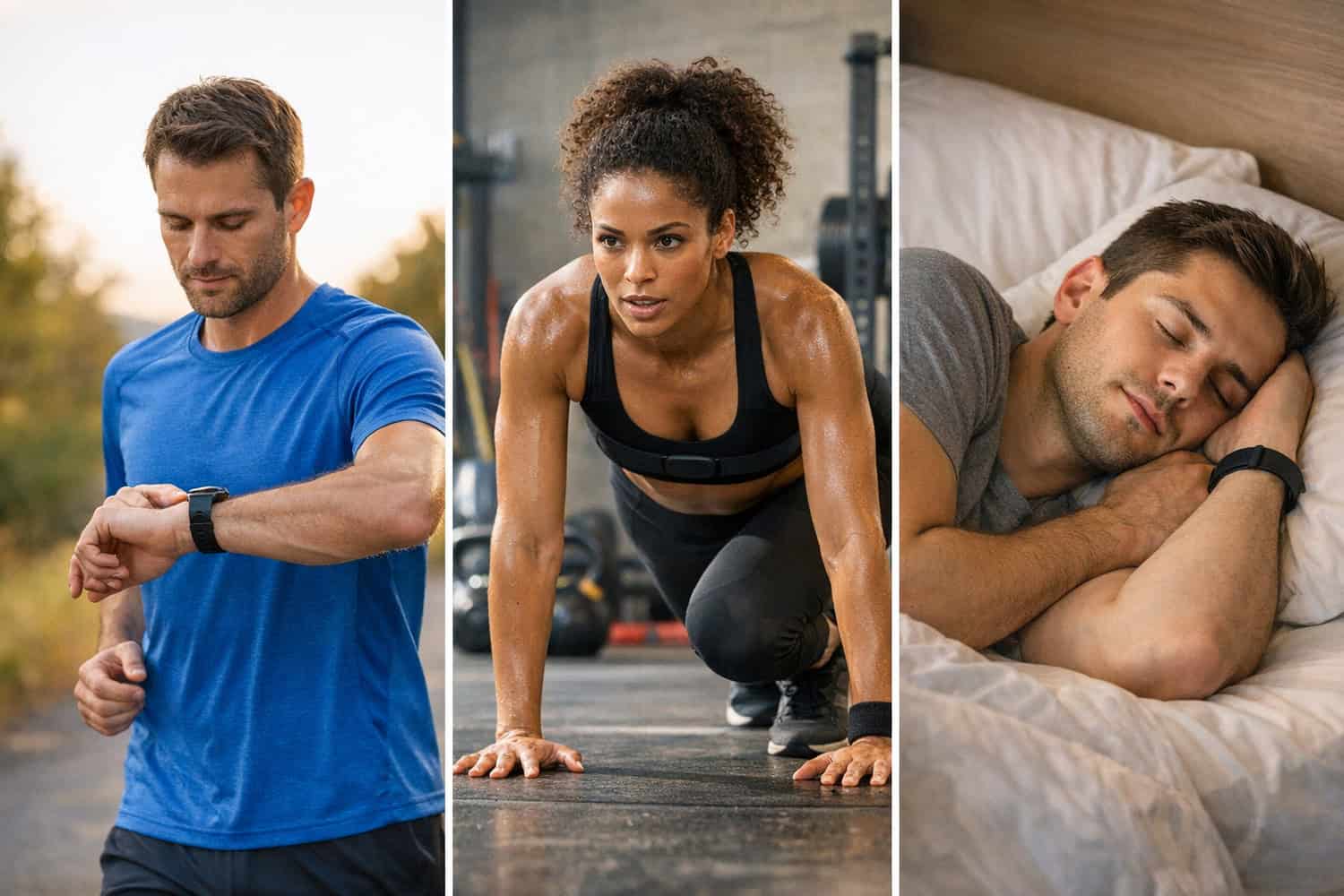
A GPS watch is usually the best wearable heart rate monitor for exercise if you run outdoors several times a week. If you do structured intervals or race training, pair it with a chest strap. That setup gives you convenience on easy days and better accuracy when the workout matters.
For strength training and HIIT
Wrist devices often struggle here because gripping weights, flexing the wrist, and explosive movement interfere with optical readings. If this sounds like you, a chest strap is the safer choice. For HIIT, chest straps are strongly recommended.
For sleep, stress, and everyday wellness
A smartwatch or slim band makes more sense than a chest strap. Comfort matters more when the device is on your body 20 to 24 hours a day. If sleep is a priority, many people prefer a lighter band over a heavier watch. You can also explore broader trend context in wellness wearable technology trends 2026.
For swimming
Swimming is still tricky. Some watches support pool heart rate tracking, but reliability varies by stroke, fit, and water conditions. If swimming is your main sport, look closely at model-specific testing instead of assuming any waterproof watch will do the job.
Budget tiers that make sense
$40 to $100: basic bands for daily heart rate and sleep. $150 to $350: entry smartwatches and stronger fitness watches. $60 to $160: chest straps, often best value if accuracy is your only goal. $400 and up: premium watches with better screens, sensors, maps, recovery tools, and ecosystem perks.
If you are also building a home cardio setup, related gear guides like best smart jumping ropes for cardio and connected fitness mirrors comparison can help you think about compatibility before you buy.
A simple checklist to choose without overthinking it
You do not need to compare 25 models. Use this filter first, then shop inside the category that fits.
| Step | What to ask | Best direction |
|---|---|---|
| Primary use | Workouts or all-day wellness? | Workouts: watch or chest strap. Wellness: watch or band. |
| Accuracy threshold | Do you need precise interval data? | Yes: chest strap. No: wrist device is often enough. |
| Form factor | Can you tolerate a strap on your chest? | If not, accept the trade-off of wrist convenience. |
| Compatibility | Will it work with your phone, apps, and gym gear? | Check before buying, especially across Apple and Android. |
| Budget | What will you actually use for 6 months? | A cheaper device worn daily beats an expensive one left charging. |
| Real-world test | Can you try it in your actual workout? | If possible, test fit and sensor behavior before committing. |
This is ideal for people who know their main goal: better training accuracy, easier all-day tracking, or lower cost. You might want to skip premium models if you mainly want resting heart rate, sleep, and step counts. In that case, a solid band may do nearly everything you need for a fraction of the price. The cheapest option often wins not because it’s better, but because it’s the one you’ll actually wear.
Frequently asked questions before you buy
Are wrist heart rate monitors accurate enough?
Usually, yes for everyday use, walking, sleep, and steady cardio. They are often accurate enough for general fitness decisions. They become less reliable during fast intensity changes, heavy wrist flexion, and some cold-weather conditions. If your training depends on precise zones, wrist-based data may not be enough on its own.
Chest strap vs wrist heart rate monitor: when does it really matter?
It matters most in HIIT, cycling intervals, rowing, and strength sessions where wrist movement is high and heart rate changes quickly. For easy runs, walking, and daily wellness, a good smartwatch or band is often fine. For serious training, chest straps still win on responsiveness and consistency.
Can wearable heart rate monitors replace medical devices?
No. Consumer wearables are useful for trends and fitness guidance, but they are not replacements for medical-grade monitoring or diagnosis. If you have symptoms, irregular readings, chest pain, or a known heart condition, talk to a clinician rather than relying on a watch alert.
What is the best wearable heart rate monitor for everyday use?
For most people, it is a comfortable smartwatch with reliable optical sensing, decent battery life, and strong app support. If comfort and price matter more than smart features, a fitness band is often the better everyday choice. The best pick depends on how much you value notifications, GPS, sleep tracking, and charging frequency.
The right pick is the one you will trust and actually wear
If you want the shortest possible recommendation, here it is. Buy a smartwatch if you want one device for workouts, daily life, sleep, and convenience. Buy a chest strap if you care about precise training data and do intervals, cycling, rowing, or strength work. Buy a fitness band if you want affordable all-day tracking and do not need advanced training metrics.
The best wearable heart rate monitors are the ones that match your tolerance for friction. I still like smartwatches for daily life, but when I really care about interval accuracy, I reach for a chest strap and do not pretend the wrist data is equal. That small bit of honesty saves money and frustration.
Still deciding between a watch, band, or strap?
Start with your main use case: workouts, daily wellness, or both. Then compare fit, battery life, and app compatibility before brand hype. It’s a short checklist, but skipping any one step usually means buying twice.
If you want a smarter wellness setup beyond heart rate alone, explore wearables for mental health tracking and how to sync wellness data across devices. The real upgrade isn’t more data — it’s the same data finally living in one place.