Improve Sleep Quality Without Medication When You’re Exhausted
Improve sleep quality without medication is usually less about finding one magic fix and more about correcting a few daily patterns that quietly keep your body alert at the wrong time. These small adjustments to your daily patterns are a foundational way to improve daily life quality and achieve better rest. If you fall asleep late, wake up at 3 a.m., or get eight hours and still feel dull and irritable, you are not imagining it. I’ve been through stretches where I was technically “in bed enough” but still woke up feeling like my brain never fully shut off. The brain can clock the hours without ever actually resting.
The good news is that mild to moderate sleep problems often respond to practical changes in light, timing, stress, and environment. The less glamorous truth: it usually takes days to weeks, not one perfect night. That slower pace is frustrating, but it is also why these changes can last. The first few nights might not feel different, but the shift shows up in how the morning starts.
The fastest way to sleep better naturally is to anchor your wake time, get outdoor light soon after waking, keep your bedroom cool and dark, stop caffeine 6–8 hours before bed, and use a short wind-down routine every night. You do not need perfect discipline to notice improvement. Sleep problems are linked to lower well-being and quality of life, so even small, consistent changes to your evening habits can reduce the fatigue and irritability that poor sleep brings. The paradox is that letting go of perfect discipline is often what makes the routine stick.
Quick Summary: Start Here Tonight
- Get outside light within 30 minutes of waking for 10–20 minutes, even if it’s cloudy.
- Keep the same wake time most days; consistency matters more than a perfect bedtime.
- Make your room cool, dark, and quiet; aim for roughly 60–67°F (16–19°C).
- Cut caffeine 6–8 hours before bed and avoid using alcohol as a sleep shortcut.
- Use a 10-minute wind-down reset: dim lights, no screens, slow breathing, and a simple brain dump on paper.
Direct answer: if you want to know how to improve sleep quality without medication, focus first on your body clock and your evening stimulation. Morning light, a stable schedule, less late caffeine, and a calmer bedroom usually outperform random supplements and late-night “sleep hacks.” Most people arrive expecting a secret and leave with a schedule.
Why Your Sleep Can Feel Long but Still Not Restful
Sleep quality matters as much as sleep duration because your body needs enough time in the right stages of sleep to restore attention, mood, immune function, and metabolic balance. Poor-quality sleep can leave you with the classic next-day mix: brain fog, low patience, stronger cravings, and that odd feeling of being tired but wired. Persistent sleep disturbances are linked to fatigue and irritability, and studies show that quality of life suffers when sleep is consistently poor. Worth protecting your sleep quality even if it means cutting the evening scroll short — the trade-off shows up the next morning.
Part of this comes down to circadian rhythm and sleep. Your internal clock responds strongly to light and darkness. Morning light tells your brain that the day has started. Dimmer evenings help your body prepare for melatonin release later on. Modern life pushes against that rhythm: bright screens at 10 p.m., indoor mornings, late work, stress, and irregular timing on weekends.
I think this is the piece many people miss. I used to blame stress alone, but my own sleep improved more once I treated light exposure and schedule drift as real biological inputs, not just “good habits.” Sleep gets easier when your environment stops arguing with your biology.
For practical guidance, the sleep advice from Mayo Clinic and NHS Every Mind Matters consistently points to the same core levers: schedule, light, stimulants, and environment.
The Sleep Facts I Wish I Knew Earlier
| Sleep factor | Useful range or guideline | Why it matters |
|---|---|---|
| Adult sleep need | Most adults need about 7–9 hours | Too little sleep raises daytime fatigue and can fragment sleep further |
| Bedroom temperature | Around 60–67°F / 16–19°C | A cooler room supports the body’s natural nighttime temperature drop |
| Caffeine cutoff | About 6–8 hours before bed | Caffeine can delay sleep and make it lighter, even if you “can still fall asleep” |
| Natural melatonin timing | Usually rises in dim evening light | Bright light late at night can delay the signal that it’s time to sleep |
| Sleep cycle length | Roughly 90 minutes | Helps explain why waking at certain times feels much worse than others |
These are not rigid rules, but they are useful anchors. Many better sleep habits work because they support these basic rhythms rather than fight them.
How to Improve Sleep Quality Without Medication in Real Life
Use light as your strongest reset button
One of the most effective natural ways to sleep better is also one of the least dramatic: get outdoor light within 30 minutes of waking. Ten minutes may be enough on a bright day; 20 minutes is better when it’s overcast. This helps anchor your wake signal and makes it easier for your body to feel sleepy at the right time later.
At night, do the opposite. Lower overhead lights, switch to warm lamps, and stop treating your face like it needs a bright rectangle at 11 p.m. You do not need to fear every screen, but reducing bright, stimulating light in the last hour helps. If you must use devices, lower brightness and keep the content boring.
Protect your schedule, especially your wake time
A consistent wake time is often more important than forcing an early bedtime. If you go to bed before you are sleepy, you can end up training your brain to associate bed with frustration. Try to keep wake time within about 30–60 minutes across most days. If your schedule is messy because of caregiving, shift work, or late meetings, aim for the most stable version possible instead of an unrealistic ideal.
This was a big lesson for me. I kept trying to “catch up” by sleeping in two extra hours on weekends, then wondered why Sunday night felt impossible. Progress started when I stopped chasing perfect and started protecting a narrower wake-time range.
Time food, caffeine, and alcohol more carefully
Caffeine can still affect sleep long after the alert feeling fades. A practical rule is to stop it 6–8 hours before bed; if you are sensitive, cut it earlier. Alcohol can make you drowsy at first but often leads to lighter sleep and more nighttime waking later. Heavy meals close to bedtime can also cause discomfort or reflux that breaks sleep.
If you need a simple food rule, keep dinner moderate and finish it 2–3 hours before bed when possible. If you get hungry later, choose a light snack rather than a large, rich meal.
Build a bedroom that makes sleep easier
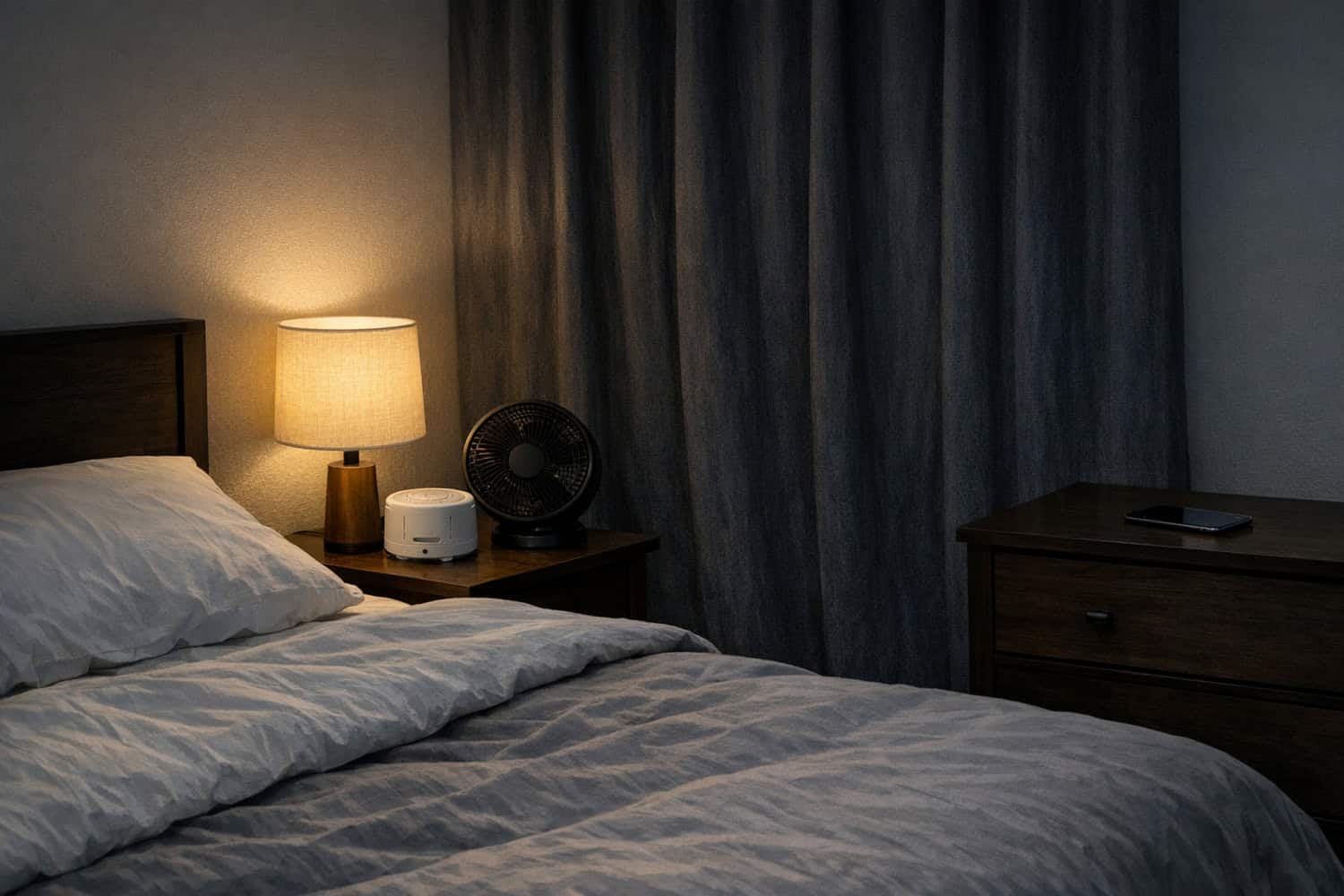
Your bedroom environment for sleep should be dark, cool, and quiet enough that your body does not have to keep reacting. Blackout curtains help, but so can a cheap sleep mask. A white noise machine is useful, but a fan or free noise app can work too. Keep the room slightly cool and reduce clutter if visual mess keeps your mind active.
Cost does not have to be huge. A sleep mask might cost $10–$20. Foam earplugs can be under $10. Blackout curtains range from about $25 to $80 per panel, while a DIY temporary blackout solution can cost much less. A basic fan is often cheaper than specialty sleep gadgets and can improve both temperature and sound.
Lower mental arousal before bed
Many people do not have a sleep problem as much as a “still mentally working at midnight” problem. A short cognitive off-ramp helps: write tomorrow’s top three tasks, note any worries, then do two to five minutes of slow breathing. This is where sleep hygiene tips become useful only when they are specific enough to follow.
The best evening routine is the one you will still do when you are tired, busy, or annoyed.
What Actually Helps, and What Can Quietly Make It Worse
A realistic evening routine for better sleep does not need to be a 90-minute spa ritual. A workable 30–60 minute version looks like this: finish food, lower lights, stop stimulating work, do basic hygiene, then read, stretch lightly, or breathe. In the morning, pair that with one strong anchor: light exposure soon after waking.
Two common mistakes show up again and again. First, people try to fix everything at once. I did this too: magnesium, strict bedtime, no screens, perfect room temperature, meditation, herbal tea, all in the same week. It was too much, and I quit half of it. Second, people stay in bed awake for long stretches, which can make the bed feel like a place for worrying instead of sleeping.
If you are awake for about 20 minutes and getting more frustrated, get up, keep the lights low, and do something quiet until you feel sleepy again. The goal is to reduce the association between bed and alertness.
Which Natural Sleep Fix Is Worth Your Effort First?
| Approach | Best for | Cost | Trade-off |
|---|---|---|---|
| Morning light + fixed wake time | Irregular schedule, late sleep onset | Free | Needs consistency for 1–2 weeks |
| Caffeine/alcohol timing | Light sleep, nighttime waking | Free or saves money | Can feel inconvenient socially |
| Bedroom upgrades | Noise, light, overheating | $10–$150+ | Quick relief, but may not fix stress-based insomnia |
| Wind-down + journaling + breathing | Stress, racing thoughts | Free to low cost | Works best with repetition, not one-off use |
This is ideal for people with mild to moderate sleep issues, inconsistent routines, or obvious triggers like late caffeine, stress, or poor sleep setup. You might want to skip self-experimenting alone if you snore heavily, stop breathing in sleep, have severe daytime sleepiness, or have insomnia that lasts for months despite effort.
My honest take: behavior changes usually beat gadgets, but environment fixes can make the fastest visible difference when your room is too bright, noisy, or hot. The best choice depends on the real bottleneck, not the trendiest solution.
For another evidence-based overview, Johns Hopkins Medicine is useful on where natural methods help and where they have limits.
A 4-Week Reset You Can Follow Without Turning Your Life Upside Down
If you want lifestyle changes for better sleep that actually stick, layer them. Don’t rebuild your whole life on Monday night. That was my mistake, and it made sleep feel like homework. Start with the highest-return habits first.
| Week | Main focus | Daily checklist |
|---|---|---|
| Week 1 | Wake time + morning light | Wake within the same 30–60 minute window; get 10–20 minutes outdoor light |
| Week 2 | Caffeine/alcohol timing + wind-down | Stop caffeine 6–8 hours before bed; do the 10-minute reset nightly |
| Week 3 | Bedroom environment | Cool room, darker setup, reduce noise, remove phone from bed area |
| Week 4 | Stress tools + nighttime waking plan | Journal worries earlier; if awake too long, leave bed briefly and reset |
For people with unpredictable schedules, use “anchors” instead of perfection. Keep the wake time as stable as your life allows, protect morning light, and keep a shorter version of your wind-down routine for chaotic days. A five-minute version still counts.
Exercise also helps, especially regular daytime movement. Most people sleep better when they move consistently, though very intense exercise right before bed can be too stimulating for some. If evening workouts are your only option, test how your body responds rather than assuming they are always bad.
Frequently Asked Questions
How long does it take for sleep to improve naturally?
Some changes, like a cooler darker room, can help right away. Circadian changes usually take several days to a few weeks. If you are working on schedule consistency, morning light, and caffeine timing, give it at least 2 weeks before deciding nothing is working. Natural methods are effective for many people, but they are not instant.
What should I do if I wake up in the middle of the night?
Keep the lights low and avoid checking the time repeatedly. If you feel calm, stay still and let sleep return. If you are awake for roughly 20 minutes and getting frustrated, get out of bed and do something quiet until you feel sleepy again. This can help reduce nighttime waking naturally by preventing your bed from becoming a stress cue.
Can naps help or hurt?
Short naps can help if you are very tired, but long or late naps can steal sleep pressure from the night. If you nap, try 10–30 minutes earlier in the day. If falling asleep at night is your main issue, reduce naps first and see whether nighttime sleep improves.
When should I seek medical help instead of self-help?
Get medical advice if you snore loudly, gasp or stop breathing during sleep, feel severe daytime sleepiness, struggle with insomnia for months, or notice depression, anxiety, or major fatigue affecting daily life. Self-help can support sleep, but it may not fully resolve moderate-to-severe insomnia or sleep apnea. The NHS and Mayo Clinic both note that persistent symptoms deserve proper evaluation.
Start Smaller Than You Want, and You’ll Probably Sleep Better Sooner
If you want to improve sleep quality without medication, start with one or two changes that directly match your problem. If your issue is a racing mind, begin with the wind-down reset. If your timing is all over the place, start with wake time and morning light. If your room is bright and hot, fix that first. This is slower than a pill, but often more sustainable.
There is an honest downside here: natural methods can take weeks, and they will not solve every sleep disorder. Still, for many adults with mild to moderate sleep problems, they meaningfully improve how fast you fall asleep, how often you wake, and how refreshed you feel in the morning. I prefer that trade-off because it builds a system, not just a temporary patch.
One calm night rarely changes your life, but a repeatable routine often does.
Try this tonight
Choose just two actions: get outside light soon after waking tomorrow, and do the 10-minute wind-down reset tonight. That is enough to begin. It asks for nothing more than a single morning and a single evening.
If sleep still feels broken after a few weeks of steady effort, talk to a clinician. Better sleep should feel possible, not like a nightly fight. Weeks of effort earn the right to ask for more than willpower.