Best Smart Jumping Ropes for Cardio Without Buyer’s Regret
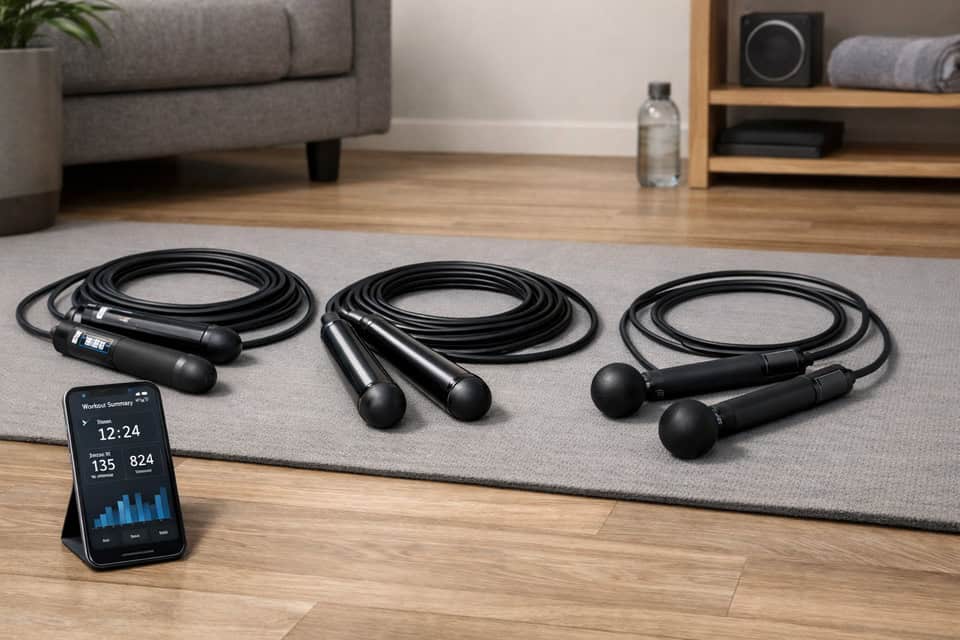
The best smart jumping ropes for cardio make short home workouts feel more engaging, more measurable, and honestly a lot less boring than pacing on a treadmill in the corner. If you have limited space, want cardio data without buying a bike or rower, or just need a compact way to stay consistent, smart ropes are a real option. But after digging into the category and testing the logic behind the features, I came away with one clear takeaway: the tracking can help, but the rope still has to feel good in your hands. The rope that feels right in your hands is the one you’ll actually pick up on day ten.
I was skeptical at first. A jump rope with Bluetooth sounded like one of those products that adds friction instead of value. Then I started looking at what people actually need at home: quick setup, decent counting, adjustable length, and enough feedback to keep motivation from fading after week two. That’s where some smart ropes earn their price, and where others drift into gimmick territory. The ones that fade after week two aren’t failures of willpower; they’re failures of feedback.
Quick Summary: Are Smart Ropes Actually Worth It?
- Yes, if you want motivation and workout tracking; no, if you only care about basic cardio.
- Beginners usually do best with a simple adjustable smart jump rope, not the most feature-heavy model.
- Apartment users often benefit from cordless options, especially when ceiling height or floor noise is a problem.
- Weighted smart ropes add upper-body demand, but they can feel tiring fast if your form is still messy.
- Rep counts and calorie estimates vary; use them as trend data, not lab-grade truth.
The Fast Answer Most Shoppers Need First
If you want a quick category breakdown, here it is. For beginners: choose a basic adjustable smart jump rope with simple counting and minimal setup. For very small spaces: a cordless smart jump rope review style product makes sense, especially in apartments. For data-focused users: a bluetooth jump rope fitness tracker with a stable app and session history is the better fit. For intensity seekers: a weighted smart jump rope can add challenge, but only if your wrists and timing are already decent. A weighted rope rewards decent form but punishes sloppy timing, so it’s worth skipping until the basics feel automatic.
I’d frame it this way: if a standard rope already keeps you consistent, stay simple. If you tend to quit cardio because it feels repetitive and invisible, a smart rope can create enough feedback to keep you showing up. That difference matters more than the spec sheet.
For a broader look at how connected fitness data fits into daily health habits, see sync wellness data across devices and wellness wearable technology trends 2026.
Why So Many Home Exercisers Are Looking at Smart Ropes
The appeal is pretty simple: jump ropes are compact, cheap compared with machines, and brutally time-efficient. According to guidance from ACE and aerobic exercise resources from Mayo Clinic, cardio doesn’t need to be complicated to improve fitness. What often gets in the way is adherence. People get bored. They lose momentum. They stop because the workout feels repetitive and there’s no feedback loop. What looks like a simple bounce at first reveals itself as a rhythm you have to find before the minutes stop dragging.
That’s where smart ropes try to help. They count jumps, estimate calories, store sessions, and sometimes build in intervals or streaks. For a home user, that can turn “I should do cardio” into “I can knock out 300 jumps before lunch.” I’ve seen that mental shift matter more than fancy metrics. A visible number can be surprisingly motivating when your energy is low.
Still, real-world friction matters. Low ceilings can make full rope swings awkward. Thin apartment flooring can amplify every landing into a thump your downstairs neighbor will notice. Missed jumps can break rhythm and make the session feel clumsy. If your room fights the workout every time, no app feature will save it.
Smart ropes tend to benefit home exercisers, travelers, and people who like measurable progress. They may be a weaker fit for anyone with strong joint sensitivity, very limited overhead clearance, or zero patience for app pairing. If that sounds familiar, a normal rope or another compact cardio option may be the smarter move. You may also like the broader behavior side of fitness tech in mental health tracking with wearables.
What You Really Get at Each Price Level
| Feature | Budget | Mid-range | Premium |
|---|---|---|---|
| Tracking | Basic rep count, timer | Rep count, session history, calories | Expanded analytics, intervals, app dashboards |
| App connectivity | Often none or limited | Bluetooth sync common | Bluetooth plus richer coaching features |
| Rope style | Light cord or cordless | Corded adjustable rope | Weighted or premium bearing systems |
| Cordless option | Common | Sometimes included | Often optional, not always standard |
| Battery / charging | Coin cell or USB | Rechargeable USB common | Rechargeable, better battery management |
| Typical price | About $20–$40 | About $40–$80 | About $80–$150+ |
Note: calorie and rep tracking varies in accuracy. Treat the numbers as useful estimates and trends, not exact physiological measurement.
How to Compare the Best Smart Jumping Ropes for Cardio Without Falling for Gimmicks
A smart rope is basically a regular jump rope with added sensors, a display, app syncing, or all three. The promise is simple: more feedback, easier progress tracking, and a little extra motivation. The reality is more mixed. Some ropes count fairly well when your rhythm is smooth. Others lose track during fast intervals, side swings, or sloppy landings. The biggest downside in this category is that calorie tracking and rep counting are often inconsistent across apps. The rope that counts perfectly in a demo stumbles the moment your form slips.
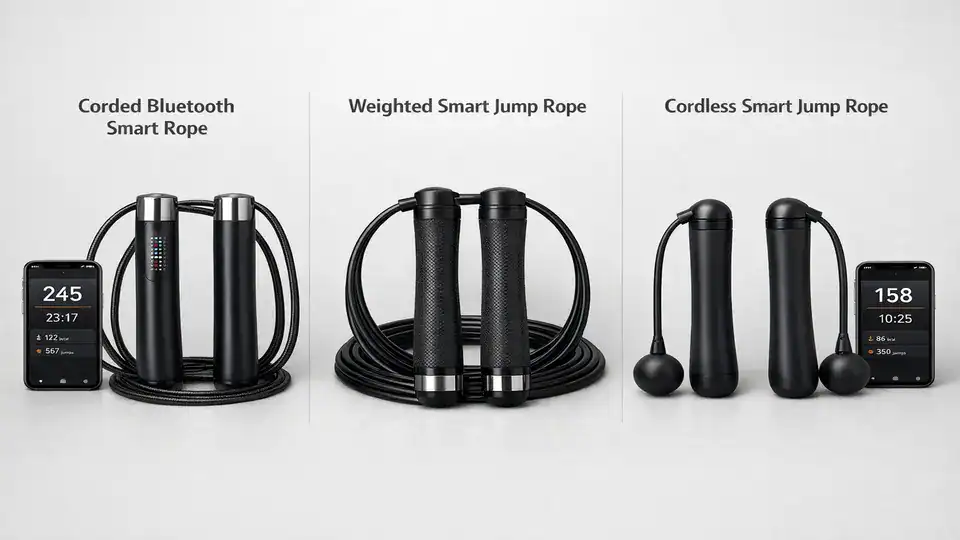
The three main types
Bluetooth app-connected ropes are the most balanced option for many people. They usually track sessions, sync to a phone, and give you enough data without changing the feel of the workout too much. The catch is app quality. A weak app can turn a good rope into an annoying one.
Weighted smart ropes make the workout feel more substantial through the shoulders and forearms. If you like the sensation of resistance and want a more muscular cardio session, they can be satisfying. But they punish bad form quickly. My forearms felt smoked much earlier with weighted handles, and that changed the workout from cardio-focused to grip-limited.
Cordless smart ropes replace the full rope with short rotating stems and weighted balls. They’re useful in tiny rooms and less likely to smack furniture or lamps. The trade-off is obvious: they don’t fully replicate real rope timing. For some people that’s fine. For others, it feels like a simulation rather than actual jumping rope.
What matters more than the marketing page
Tracking accuracy: This is where smart rope app accuracy becomes a real buying factor. If the rope misses 20 to 40 jumps in a short session, the data starts to feel pointless. Small errors are normal. Constant errors are demotivating.
App quality: Look for simple pairing, readable workout history, and stable syncing. I’ve made the mistake of assuming more app features meant better value. In practice, too many menus and setup prompts can kill the “grab it and go” appeal.
Handle comfort and rope feel: This sounds basic, but it decides whether you’ll use the rope three times a week or leave it in a drawer. Good handles feel secure when your palms get slick. Cheap handles often feel hollow, rattly, or oddly square in the hand. The rhythm matters too: a rope that turns smoothly is easier to learn on than one that jerks with every rotation.
Adjustability: An adjustable smart jump rope is almost always the safest choice for shared households or beginners. Bad sizing can make even a decent rope feel impossible.
Noise and floor impact: Hard floors amplify every landing and every rope slap. If you live in an apartment, this matters more than another dashboard metric. Research from Harvard Health on calorie burn comparisons is useful context, but your room setup will decide whether you can actually stick with the workout.
More data usually means more setup friction. If you hate charging devices, updating apps, and reconnecting Bluetooth, a simpler rope may give you better long-term results.
Small Setup Mistakes That Make People Quit Too Early
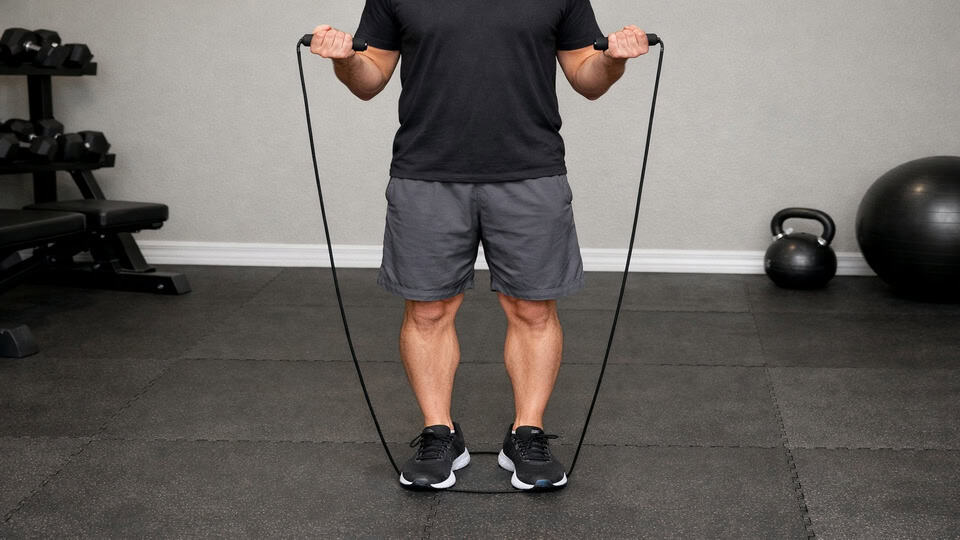
That sizing trick sounds minor, but it changes everything. Too long and the rope drags, catches, and ruins timing. Too short and you clip your toes every few jumps. When I first adjusted a rope by guesswork instead of measuring it, I blamed my coordination for a week. It was mostly the rope length. After a few clean jumps, the drag disappears and the timing clicks without thinking.
Another mistake is going too hard too soon. Start with 20 to 30 second intervals, then rest for 30 to 60 seconds. Repeat for 8 to 10 rounds. That gives you 4 to 5 minutes of actual jumping, which is enough for many beginners. Jump rope fatigue arrives fast, especially in the calves. If you open with a “10-minute nonstop challenge,” there’s a good chance you’ll hate the experience and stop.
Space is another daily issue people underestimate. Check ceiling height, fan clearance, and the surface under your feet. A low ceiling can force you to hunch or shorten the swing. Hard tile can feel harsh on the joints and loud enough to become a household problem. A thin mat can help with sound, but too much cushion can throw off balance.
My biggest regret in this category was buying a feature-heavy rope before deciding whether I even liked app-based cardio. The setup took longer than the workout, Bluetooth dropped twice, and I started skipping sessions because the process felt annoying. That’s a useful lesson: the best smart rope is the one you’ll actually pick up without negotiation.
Which Type Makes Sense for Your Space, Budget, and Goals?
Best for beginners: a simple corded smart rope with basic counting, comfortable handles, and easy length adjustment. Price target: about $30 to $60. You want enough feedback to build the habit, not a mini operating system in your pocket. You trade flashy metrics for a rope that actually works first try, every time.
Best for apartments or low-noise setups: a cordless smart rope or a quieter rope used on a mat. Price target: about $20 to $50. This is ideal for people dealing with low ceilings, furniture, or neighbor noise. You lose some realism, but you gain usability.
Best for travelers: a lightweight rope with minimal app dependency. Price target: about $25 to $45. If you’re carrying it in a bag, charging one more device may not be worth it. Simplicity wins here.
Best for performance-focused users: a weighted smart rope or premium app-connected rope with interval tools and session history. Price target: about $70 to $150+. This is for users who genuinely review data, care about progression, and won’t be annoyed by setup.
Who should buy one: people who need engagement, like measurable progress, want compact home cardio, or tend to stay consistent when a device tracks them. Who should skip one: people who already enjoy a regular rope, hate pairing apps, have joint irritation, or need absolute tracking precision.
If this sounds like you, buy accordingly: if you’re trying to build a habit, go basic. If your room is cramped, go cordless. If you love metrics and intervals, spend more. If you mostly want sweat and simplicity, save the money and buy a good regular rope instead.
A Smarter Buying Checklist Before You Spend Anything
| Step | What to decide | What to watch for |
|---|---|---|
| Define your goal | Fat loss, endurance, or habit-building? | If habit is the goal, simplicity matters most. |
| Check your space | Ceiling height, floor type, noise tolerance | Cordless may be better in tight rooms. |
| Decide on tracking | Do you need reps only or full app history? | More data means more setup and charging. |
| Choose rope type | Standard, weighted, or cordless | Weighted is tougher; cordless is easier in small spaces. |
| Set a budget | $20–$40, $40–$80, or $80+ | Don’t pay premium prices for features you won’t use. |
| Prioritize comfort | Grip, handle shape, smooth rotation | Comfort beats app complexity almost every time. |
| Test a simple routine | Use the rope for one week before chasing data | Make sure the habit works before trusting the metrics. |
If you want a connected setup where your cardio data plays nicely with the rest of your health tools, that broader ecosystem matters too. It’s worth reading how to sync wellness data across devices before you commit to an app-dependent rope. The trade-off is simple: a few minutes of research now saves you from a rope that talks to nothing but its own app.
The Questions People Still Ask Before Hitting Buy
Are smart jump ropes accurate?
They’re accurate enough for trend tracking, but not perfectly accurate. Rep counts can drift when your rhythm breaks, when you do tricks, or when the sensors are less responsive. Calorie estimates are even less exact because they depend on assumptions about body weight and intensity. Use the numbers to compare your own sessions over time, not as exact physiological truth. The second look at those numbers is where the real insight lives — not in the single session, but in the direction the line moves over a few weeks.
Are they worth the price compared with a regular rope?
Sometimes. A regular rope can cost under $20 and deliver excellent cardio. A smart rope becomes worth it when the app, counter, or session history helps you stay consistent. If you know you ignore fitness data and dislike charging devices, the extra cost probably won’t pay off. Worth it if you’re someone who actually looks back at the numbers.
Can beginners use a beginner smart jump rope cardio setup? It’s a simple first step before diving into a complete beginner smart home setup.
Yes, but beginners should choose a rope with easy length adjustment, comfortable handles, and simple tracking. Start with 20 to 30 second rounds and focus on rhythm before speed. A weighted rope or complicated app can make the learning curve steeper than it needs to be. Those first few rounds feel clumsy, but the handles settle after the second session.
Do smart ropes work in small rooms?
Yes, especially cordless models. But check your ceiling height, fan clearance, and floor noise first. A full rope needs more swing space than most people expect. If you’re in a tight apartment, cordless or low-noise use on a mat is often the most realistic setup.
What I’d Remember Before Buying One
The best smart jumping ropes for cardio are useful, compact, and sometimes surprisingly motivating. They can help you turn random bursts of effort into a routine you can see and repeat. But they are still jump ropes, not miracle devices. If the handles feel awkward, the app is unreliable, or your room setup is annoying, the novelty fades fast.
I’d keep the decision simple. Buy a smart rope if tracking will genuinely help you stay consistent. Skip the extra tech if you already know you prefer friction-free workouts. Consistency beats features every single time.
For readers who like following the bigger shift in connected fitness, the trend line is worth watching at wellness wearable technology trends 2026. And if you want a product-testing mindset similar to how gear is evaluated in broader fitness categories, Wirecutter is useful for understanding what practical testing should look like.
Choose the Rope That Fits Your Life, Not the Hype
If you’re deciding today, start with your room, your patience for tech, and your real cardio goal. That will narrow the field faster than any feature list.
Want a smarter overall wellness setup beyond one device? Explore mental health tracking with wearables and related wellness tech guides so your next purchase supports a routine you’ll actually keep.