Best Robot Vacuum Cleaners for Apartments Without Regret
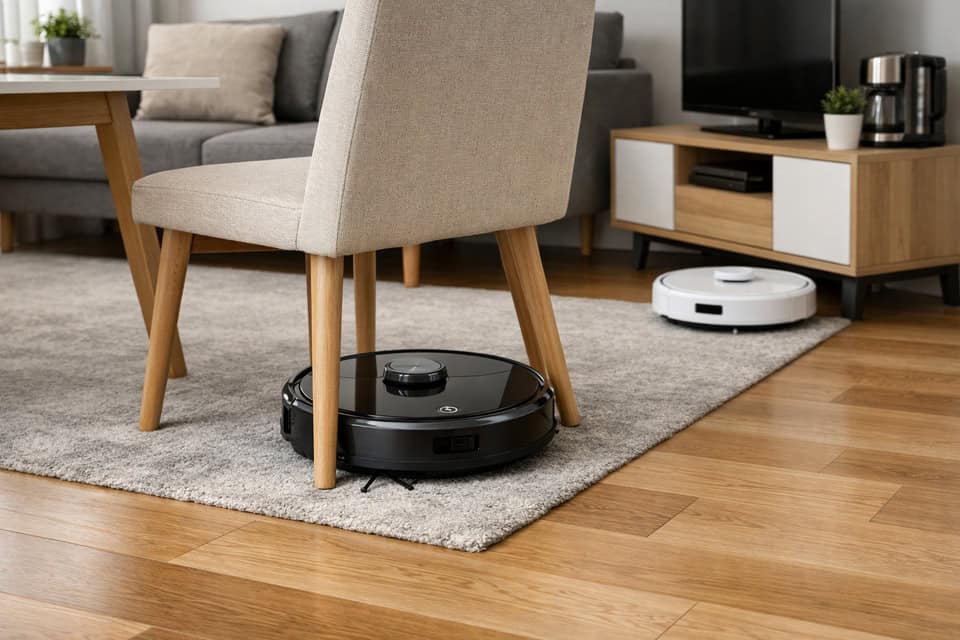
Best robot vacuum cleaners for apartments aren’t the same as the “best overall” models you see on generic lists. In a small place, the problems are different: chair legs everywhere, low couches, shared walls, limited dock space, and that annoying echo when a loud vacuum starts at 7 a.m. I’ve dealt with that exact apartment soundtrack, and I’ve also made the classic mistake of buying a model that looked impressive on paper but took up too much floor space near the only free outlet. A bigger battery sounds great until you realize the dock eats the square footage you don’t have.
This guide is built for real apartment living. Not spec worship. If you want the short version: most apartment dwellers should prioritize quiet operation, slim height, reliable navigation, and a dock that doesn’t dominate the room. If you have pets, go stronger on brush design and suction. If you have a studio, slim and quiet matter more than giant battery figures. If you have mixed floors, a LiDAR robot vacuum for apartments is usually the safest bet for cleaner, faster navigation. The spec sheet stops mattering the moment the vacuum can’t fit under your couch.
Quick Summary
- Best overall fit for most apartments: a mid-range LiDAR robot vacuum for apartments with strong mapping, moderate suction, and a compact dock.
- If you live in a studio: choose a quiet robot vacuum for apartment living that is under about 3.8 inches tall.
- If you have pets: prioritize anti-tangle brushes, easy bin access, and better carpet pickup over flashy app extras.
- If you want lower cost: the sweet spot for a budget robot vacuum for apartments is usually under $300, but expect simpler mapping.
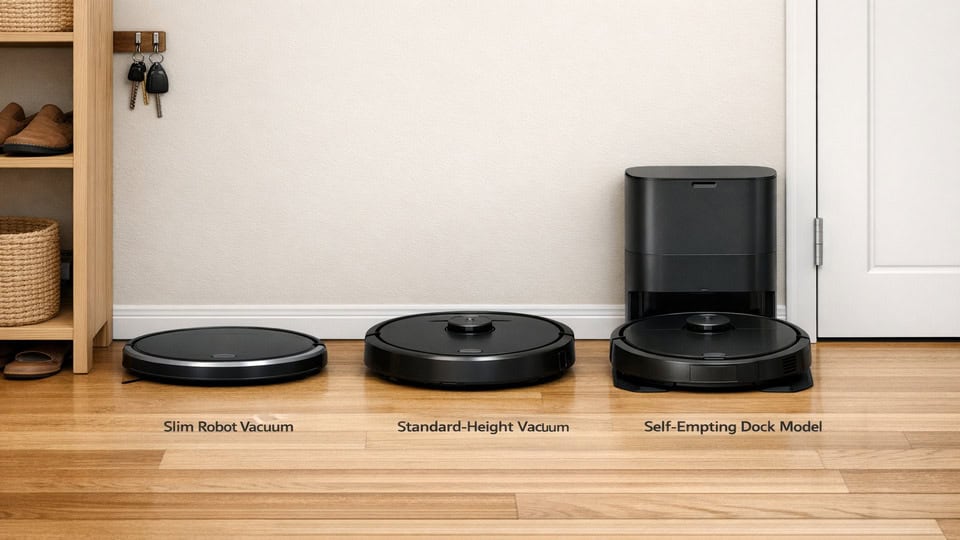
- If you’re tempted by self-empty docks: measure first. In small apartments, the dock can be more annoying than the vacuum.
- Most common regret: buying too large, too loud, or too premium for the actual layout.
If You Just Want the Fast Answer, Start Here
Search intent shortcut: You’re trying to figure out which type of robot vacuum actually works in a small apartment without wasting money on features you won’t use. It rewards buyers who know the difference between a feature they want and one they’ll actually schedule.
Here’s the practical shortlist by scenario:
- Best for studios: slim, quiet, LiDAR-based model with no giant dock.
- Best for one-bedroom apartments: mid-range mapping vacuum with room zoning and decent threshold handling.
- Best robot vacuum for pet hair in apartments: stronger suction, rubberized or anti-tangle brush, good edge cleaning.
- Best for mixed floors: a robot vacuum for carpet and hardwood apartment setup with automatic suction adjustment.
- Best value: simple mapping, no self-empty dock, under $300.
- Best premium choice: self-emptying only if you truly have a place to hide the dock.
If I had to reduce this to one rule, it would be this: buy for your floor plan first, not the spec sheet.
For broad product trend coverage, recent buying roundups from Mashable and small-space guidance from Narwal point in the same direction: compact design and navigation quality matter more in apartments than raw battery bragging rights.
Why Apartment Living Changes the Buying Rules
A robot vacuum in a detached house can get away with being louder, larger, and less graceful. In an apartment, every flaw feels bigger. Motor noise bounces off walls. The dock sits in plain sight because there’s nowhere else to put it. A slightly taller unit suddenly can’t get under the bed, which means the dustiest zone stays untouched. Apartment living asks more from a vacuum than square footage alone suggests.
That’s why standard “best robot vacuum” rankings often miss the point. They reward maximum suction, giant docks, or oversized batteries. But for robot vacuums for small apartments, the real priorities are tighter turning, better obstacle handling, lower noise, and storage footprint. I noticed this fast in my own place: the model with the biggest dock looked excellent online, then blocked part of the walking path between the entry and kitchen. That got old in two days.
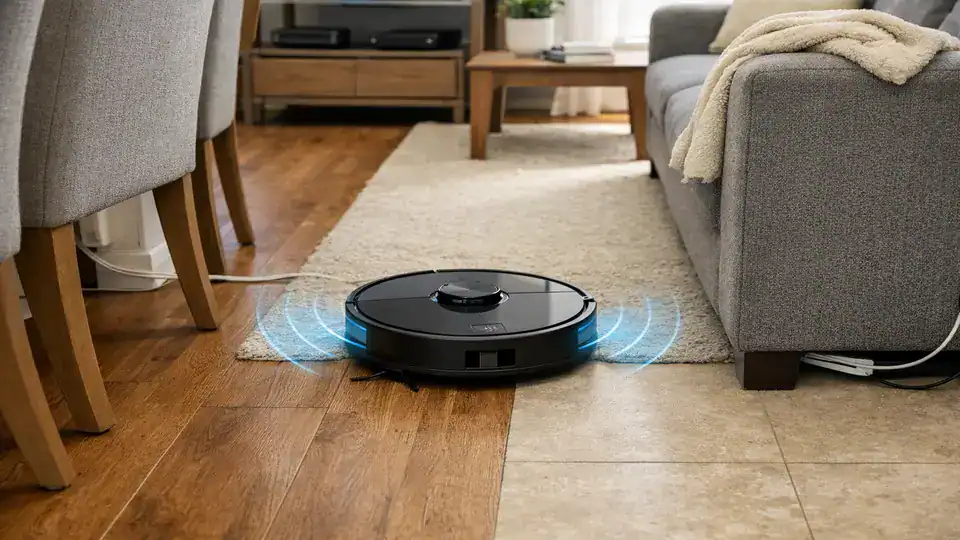
Mixed flooring is another apartment-specific issue. A lot of rentals combine hardwood, laminate, tile, and one or two rugs in a small footprint. That means transitions happen constantly. If your apartment also has thresholds or uneven strips between rooms, navigation and wheel design matter more than a headline suction number.
The gap between marketing claims and tight-space reality is where most apartment buyers overspend.
The Specs That Actually Matter in Small Spaces
These are the specs that actually made a difference in my apartment, and they’re the ones worth comparing before you buy.
| Feature | Why It Matters in Apartments | Ideal Range |
|---|---|---|
| Noise level | Shared walls and echo make loud units more noticeable. | Lower is better; quiet modes are valuable. |
| Height | Critical for beds, sofas, media units, and a slim robot vacuum for under furniture. | Around 3.0–3.8 in is easier to live with. |
| Navigation type | Tight layouts punish random bumping. | LiDAR or strong smart mapping. |
| Dock size | A giant dock can eat up your only clear wall space. | Compact if possible; measure width and depth. |
| Battery | Apartments rarely need huge runtimes. | Enough for one full pass; extra is nice, not essential. |
| Bin size | Small homes still fill bins fast if you have pets. | Moderate is fine unless shedding is heavy. |
| Suction and brush design | Important for rugs, pet hair, and corners. | Balanced power with anti-tangle design. |
If you want deeper context on smart-home setup trade-offs in small homes, this beginner smart home setup guide and these beginner-friendly smart home devices are useful starting points.
How to Choose the Best Robot Vacuum Cleaners for Apartments by Real-Life Scenario
By apartment size
Studio: Go compact, quiet, and slim. You do not need a huge battery or oversized self-empty station. In a studio, the vacuum is always “in the room” with you, so sound and visual bulk matter more. A simple LiDAR unit is often the best blend of efficiency and sanity.
One-bedroom: This is the sweet spot for a mid-range mapper. Room zoning helps, especially if you want the kitchen cleaned more often than the bedroom. If your place has one rug and mostly hard floors, a robot vacuum for hardwood floors apartment setup with adjustable suction is usually enough.
Multi-room apartment: Here, stronger mapping and better threshold handling become more valuable. If doorsills are uneven, check real-world reviews for crossing performance rather than assuming every model can handle it.
By flooring and clutter level
For hardwood-heavy apartments, brush softness and wheel traction matter almost as much as suction. You want pickup without the machine scattering debris along baseboards. For low-pile carpet, moderate suction is usually enough. For a robot vacuum for carpet and hardwood apartment setup, look for automatic carpet boost and reliable room maps so the vacuum doesn’t waste time re-cleaning the same patch.
Clutter changes everything. Honest downside: robot vacuums struggle in cluttered apartments with cables, chair legs, laundry racks, and tight corners. Better navigation helps, but it does not perform miracles. I learned this the hard way after assuming “smart obstacle avoidance” meant “I never have to pick up charging cords again.” It didn’t.
By lifestyle: pets, quiet, mopping, and self-emptying
If pet hair is your main issue, prioritize brushroll design, edge pickup, and easy maintenance. The best robot vacuum for pet hair in apartments is not always the most expensive one; it’s the one you can actually empty, untangle, and run often. Rubberized dual rollers or anti-tangle systems are worth paying for.
If you need a quiet robot vacuum for apartment living, look for strong scheduling controls and a genuinely usable low-power mode. Daytime cleaning is smarter anyway. Run the vacuum during daytime hours to avoid neighbor noise complaints, especially if your floors carry vibration.
A robot vacuum mop combo for apartments can make sense if your home is mostly hard flooring and you want light maintenance cleaning. Just keep expectations realistic: combo units are best for dust and fresh footprints, not sticky spills or deep scrubbing.
Self-emptying models are convenient, but they’re not automatically the best choice. My regret purchase was exactly this: a premium self-emptying model that worked well but didn’t fit anywhere without blocking walking space. In a house, maybe fine. In a 700-square-foot apartment, not so much.
The best apartment robot vacuum is usually the one you’ll actually run three times a week, not the one with the longest feature list.
Small Mistakes That Turn Into Daily Annoyances
Practical tip: Measure clearance under your couch and bed before buying a slim robot vacuum. Don’t guess. Even a half inch matters.
Warning: Dock placement can fail even when the vacuum itself fits. Leave enough side and front clearance for docking and emptying. The dock asks for more room than you think it needs.
A common mistake is assuming all low furniture is robot-friendly. It isn’t. Decorative trim, sagging fabric under sofas, and bed frames with center supports can stop a vacuum cold. Measure the narrowest point, not the tallest visible edge. A tape measure under the couch saves more time than any return label will.
Common mistake number two is ignoring thresholds and rug edges. Apartment layouts often have awkward transitions between bathroom tile, hallway laminate, and living room rugs. If your place has multiple thresholds or uneven flooring, check wheel clearance and user reports before buying. This realistic variable matters more than many buyers expect.
Another friction point is app setup. Mapping can be great once it works, but first-time scans sometimes produce weird room splits or miss narrow kitchen areas. I’ve had to remap after moving two dining chairs by a few inches. It’s not a dealbreaker, but it is one more reason not to overpay for “smart” features you won’t use.
Which Type Is Worth Your Money Right Now?
Instead of pretending one model fits everyone, here’s a more honest breakdown by budget and need. The best model isn’t the one with the most features—it’s the one that fits your actual floor plan.
- Budget robot vacuum for apartments under $300: best for studios, minimal clutter, mostly hard floors, and buyers who can live with basic mapping or structured navigation. Good value, fewer frills.
- Mid-range balanced option at roughly $300–$600: best for most renters and small households. This is where you usually get the strongest value: better mapping, quieter cleaning, and fewer random collisions.
- Premium at $600+: ideal for pet-heavy homes, multi-room layouts, or people who truly want automation. But only if the dock fits and you’ll use the advanced features.
Who should buy budget: renters in studios, first-time buyers, mostly hardwood floors, low clutter, no heavy shedding pets.
Who should buy mid-range: most apartment dwellers. If you want the least regret, this is usually the category to start with.
Who should buy premium: pet owners with lots of hair, busy schedules, or multi-room apartments where self-emptying and advanced mapping solve a real problem.
You might want to skip premium models if your apartment is tight, your storage is limited, or you clean up clutter manually before every run anyway.
For testing-oriented comparisons, The Smart Home Hook Up is one of the better sources for side-by-side vacuum performance and navigation discussion. And if you’re building a broader apartment automation setup, these smart home automation ideas can help you think through scheduling and routines.
The Exact Buying Checklist I’d Use If I Had to Start Over
If I had to redo my purchase, I’d follow this exact order instead of getting distracted by premium features. Premium features have a way of looking essential until you realize you never used them.
| Step | What to Check | Why It Matters |
|---|---|---|
| Measure clearance | Bed, sofa, TV stand, chair spacing | Prevents buying a unit that misses key dust zones |
| Map your floor types | Hardwood, tile, rugs, carpet | Determines suction and mop usefulness |
| Set your noise tolerance | Daytime only or flexible schedule? | Shared walls make loud units harder to live with |
| Choose navigation | Random, gyroscope, or LiDAR | LiDAR is usually the safer apartment choice |
| Set a realistic budget | Under $300, $300–$600, or $600+ | Avoids paying for features you won’t use |
| Check dock/storage space | Outlet location and walking path | Prevents the classic oversized-dock regret |
A five-minute measuring session can save you a $700 mistake.
Frequently Asked Questions
Do robot vacuums work well in small apartments?
Yes, often better than in larger homes, because the floor area is easier to cover consistently. The catch is that apartments expose weaknesses faster: noise, dock size, poor navigation, and trouble with chair legs. For most people, a compact mapped model works better than a random-navigation unit.
Are self-emptying docks worth it in apartments?
Sometimes. They’re worth it if you have pets, allergies, or a multi-room layout and enough dock space. They’re less worth it in studios or tight one-bedrooms where the dock becomes visual clutter or blocks movement. Measure the dock area before paying the premium.
How loud is too loud for shared-wall apartment living?
There’s no universal cutoff because floor construction and wall insulation vary a lot. But in practice, quieter low-power modes and daytime scheduling matter more than chasing max suction. If your floors transmit vibration, even a moderate vacuum can sound harsher to neighbors below.
Can one robot vacuum handle both carpet and hardwood in an apartment?
Usually yes, especially in apartments with low-pile rugs and mostly hard floors. Look for automatic suction adjustment, decent threshold handling, and a brush that won’t scatter debris on hardwood. If your rugs are thick or your thresholds are tall, check real-world user feedback before buying.
Pick the Vacuum That Fits Your Apartment, Not Someone Else’s House
The smartest way to choose among the best robot vacuum cleaners for apartments is to start with your constraints: furniture clearance, dock space, floor mix, noise tolerance, and whether pet hair is a daily problem. For most apartment dwellers, the winning formula is a mid-range LiDAR model with a compact footprint, decent quiet mode, and enough intelligence to avoid wasting time bouncing around chair legs. The real intelligence isn’t in the robot—it’s in knowing which constraints matter most to you.
I’d keep it simple. If you live in a studio, go slim and quiet. If you have pets, pay more for brush design and maintenance ease. If you’re eyeing a premium self-emptying model, make sure it solves an actual problem and doesn’t create a new one in your hallway. That’s the difference between a useful appliance and a very expensive obstacle.
The right robot vacuum should remove friction from apartment life, not add a new piece of it.
Compare Your Shortlist Before You Buy
Take two or three models and compare these five things side by side: height, dock size, navigation type, noise behavior, and brush design. That quick filter eliminates a lot of apartment-unfriendly options fast.
If you’re building a smarter small-space setup around your cleaning routine, revisit your smart home basics and then shortlist the robot vacuum that actually fits your floor plan, budget, and patience level.