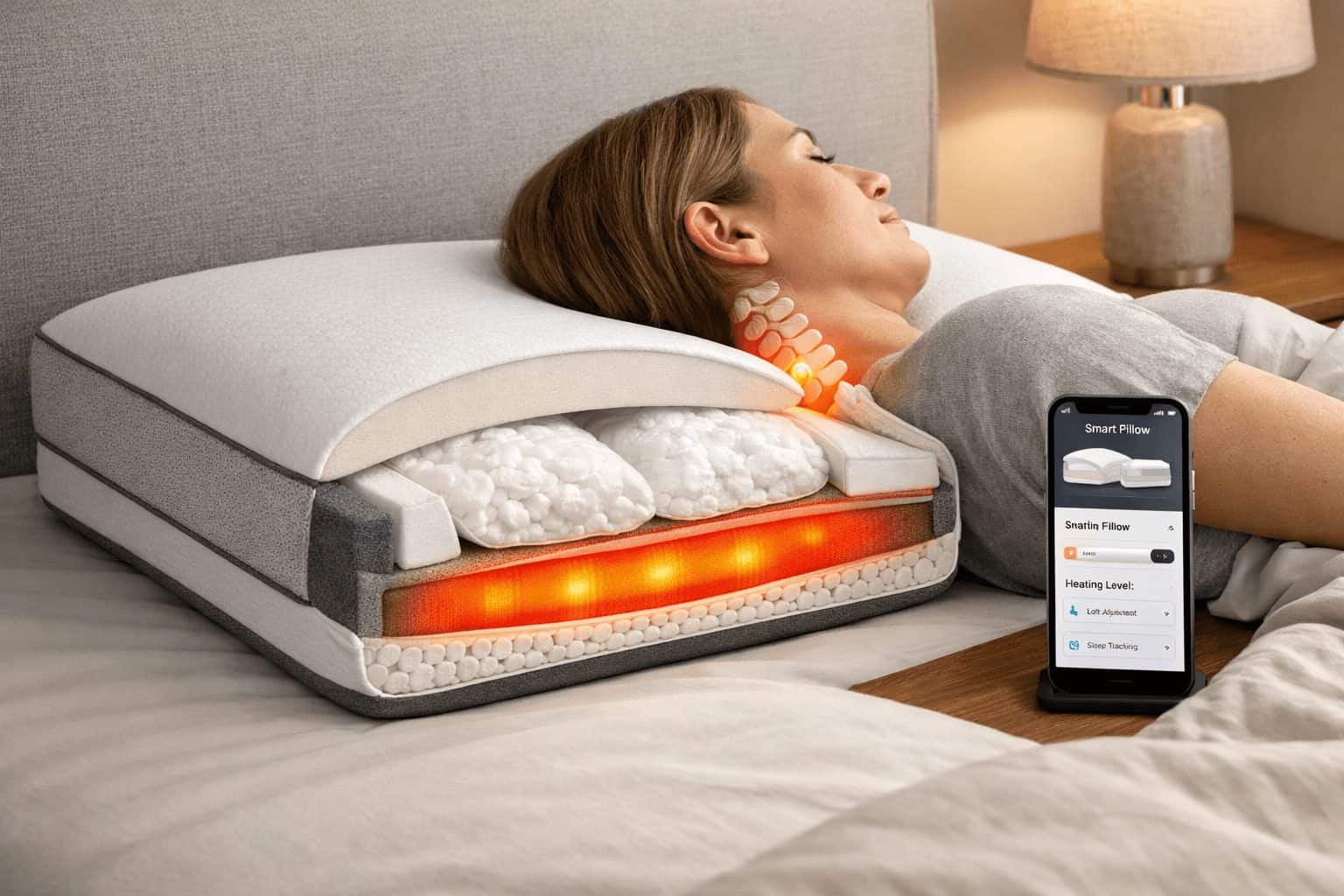
Best Smart Pillows for Neck Pain Relief: What Actually Helps
The best smart pillows for neck pain relief can help, but only when the tech supports the boring stuff that matters most: cervical alignment, adjustable loft, and pressure relief. This focus on fundamentals is crucial for all wellness tech, including smart jumping ropes that track and improve your cardio workouts. I went down the rabbit hole of smart pillows after too many mornings waking up with that familiar tight, cranky feeling at the base of my neck, even after buying pillows that were supposedly “orthopedic.” Some smart models do offer real value. Others are expensive gadgets wrapped around an average pillow. The tech that helps most is the kind you don’t notice after you fall asleep.
If your pain is mostly from sleep position, mild stiffness, muscle tension, or a pillow that never quite fits your shoulders and neck, a smart pillow may be worth considering. If you have nerve pain, an injury, severe headaches, arm numbness, or a diagnosed cervical condition, no pillow app is going to solve that. That distinction matters before you spend $150 to $400. The app is only useful when the pillow already does its job.
Quick Summary
- Direct answer: smart pillows can help neck pain when they improve alignment and fit your sleep position.
- Best feature for actual relief: adjustability beats tracking, snore tech, and most app extras.
- Heating can help morning stiffness and muscle tightness, but it is not ideal for hot sleepers.
- Sleep tracking is interesting, yet it usually has less impact on pain than support shape and loft.
- Most people overspend by buying feature-heavy models before checking return policy, fill options, and neck contour.
- Smart pillows will not fix structural injuries, chronic inflammatory issues, or pain that needs medical care.
Are smart pillows actually worth the money?
Yes, sometimes. But not in the way most product pages suggest. The smartest thing about a pillow for neck pain is rarely the app. It is the ability to change the pillow’s height, firmness, and shape so your neck stays neutral instead of bending up, down, or sideways all night. That is why a good adjustable smart pillow for side sleepers often has more practical value than a premium model focused on sleep graphs.
From a buying perspective, the sweet spot is usually someone with mild to moderate recurring stiffness, no major red-flag symptoms, and a clear mismatch between their current pillow and sleep position. In that case, a smart pillow can reduce morning tightness, cut down on tossing caused by discomfort, and help you fine-tune support more precisely than a fixed memory foam shape.
If your symptoms are sharp, radiating, or linked to an injury, the answer changes. A pillow can support recovery, but it cannot replace diagnosis or treatment. That’s the expensive mistake many buyers make: confusing comfort tech with medical care.
Why neck pain sticks around even after buying a “good” pillow
I used to think firmer automatically meant better support. In my case, that was only half true. A pillow can feel supportive when you first lie down, then push your head too high once your shoulder settles into the mattress. That small angle change is enough to leave the neck muscles working overnight instead of relaxing.
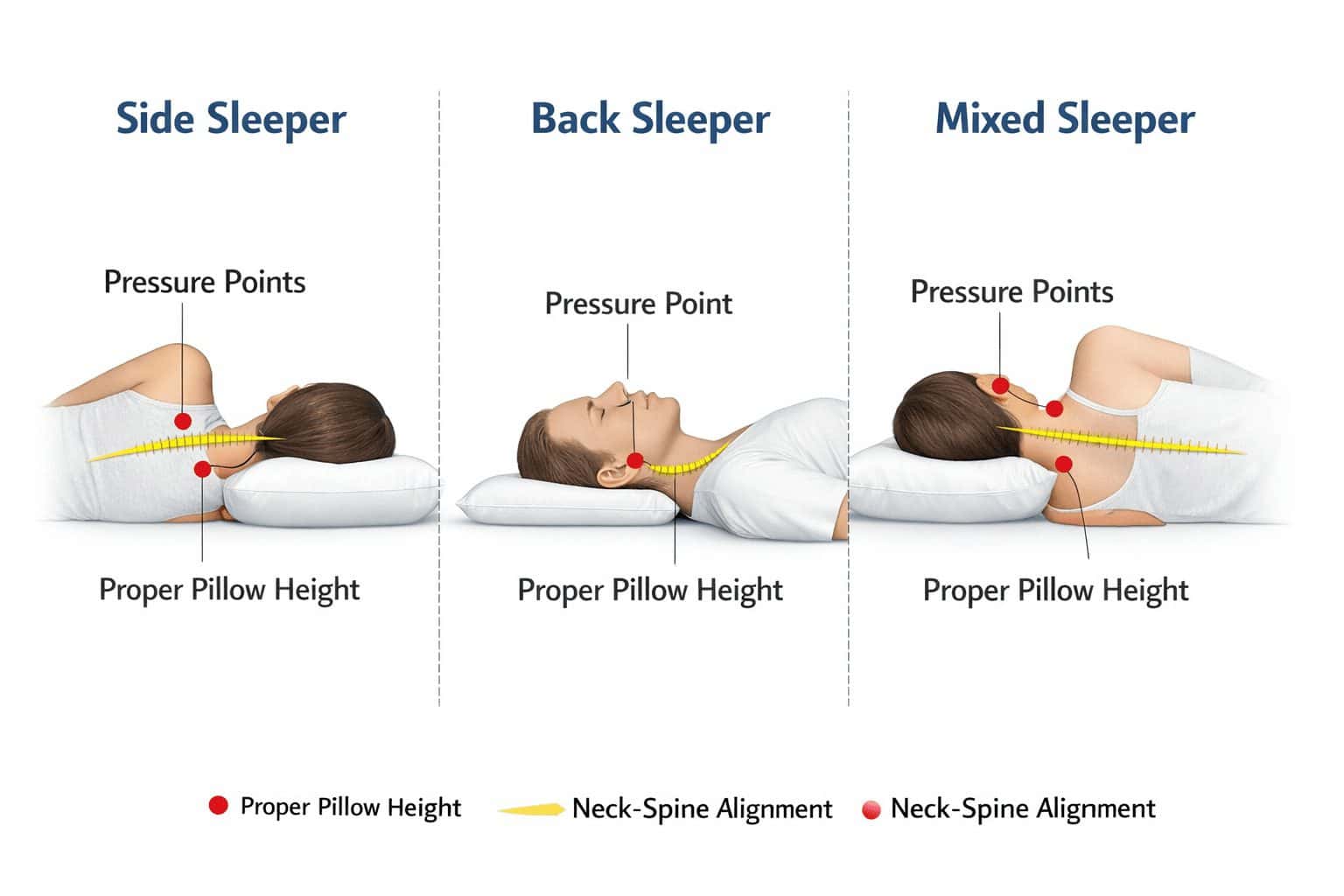
Basic cervical alignment is simple in theory: your head should stay in line with your spine, not tilted up, cranked sideways, or dropped backward. In practice, that gets messy fast because side sleepers usually need more loft, back sleepers need moderate contour without too much height, and mixed sleepers need something forgiving enough to handle position changes at 2:00 a.m. without turning into a wrestling match.
Standard memory foam fails some people for two common reasons. First, the shape is fixed. If it is wrong for your shoulder width or mattress softness, you cannot do much about it. Second, foam can trap heat, and that matters more than people think. Warmth can relax muscles, but overheating can also trigger restless sleep and more micro-adjustments. Those little shifts may not wake you fully, yet they can leave your neck feeling worked over by morning.
Sleep position also changes overnight. Even if you fall asleep on your back, you may wake on your side with your neck twisted into the edge of the pillow. That is one reason the best designs focus on fit across positions, not just one perfect pose shown in marketing photos.
The smart pillow features that matter most at a glance
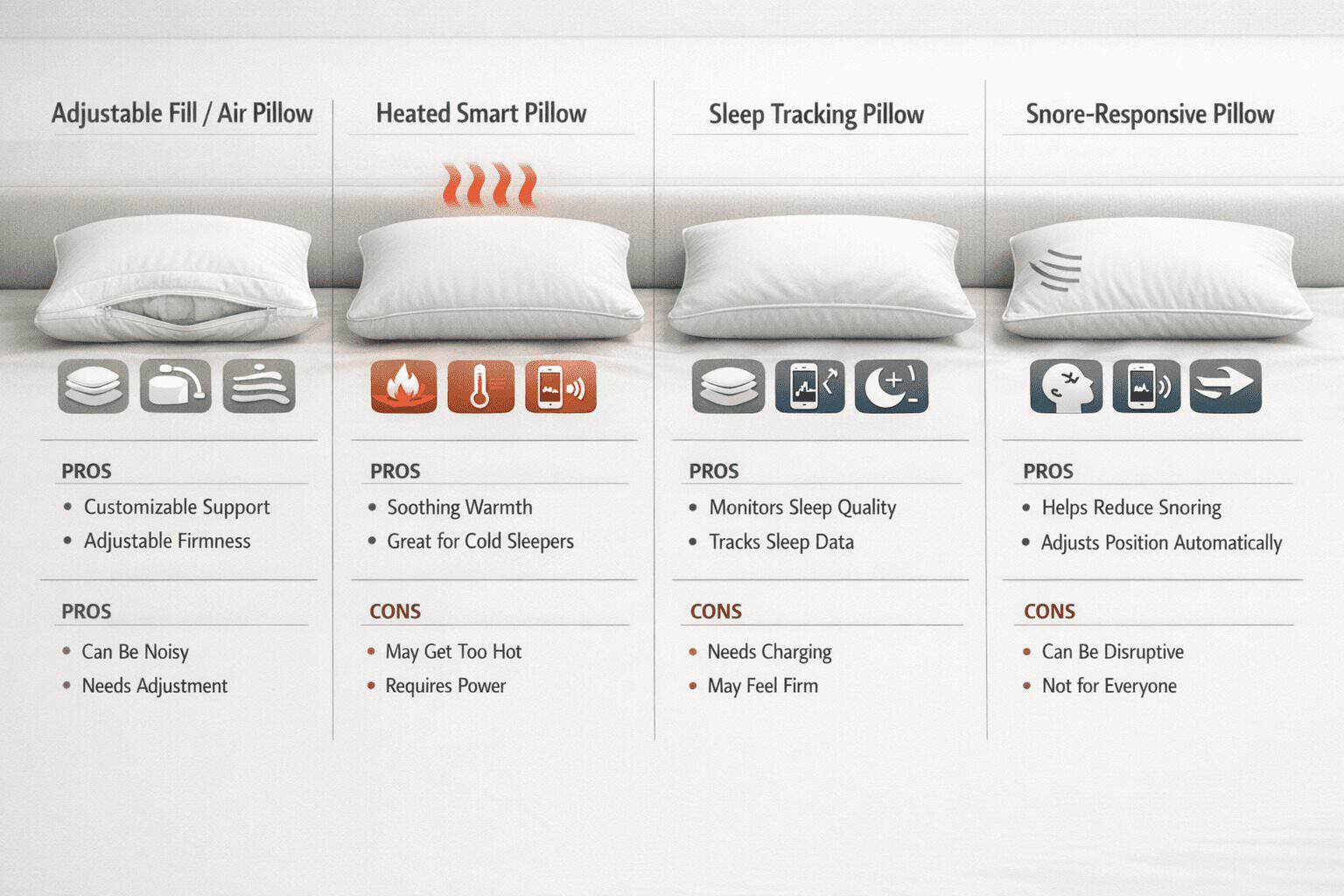
Before comparing products, it helps to separate genuinely useful features from expensive extras. The table below is the simplest way I found to think about it.
| Feature type | What it does | Who it helps | Limitations | Typical cost |
|---|---|---|---|---|
| Adjustable fill or air | Changes loft, firmness, or support zones | Side sleepers, mixed sleepers, people still dialing in support | Setup takes trial and error | $80–$220 |
| Heated smart pillows | Adds warmth to relax tight muscles | People with morning stiffness or cold-weather tightness | Can overheat; limited benefit if support is poor | $120–$250 |
| Motion or snore-responsive | Adjusts position or inflates to reduce snoring | Back sleepers with snoring issues | Indirect benefit for neck pain; more moving parts | $180–$400+ |
| Sleep tracking pillows | Tracks movement, sleep phases, snoring, or habits through an app | Data-minded users trying to spot patterns | Often weak connection to pain relief itself | $100–$300 |
If your budget is under $100, prioritize adjustability and washable materials. Between $100 and $200, heating or better contour may be worth it. Over $250, you should expect a very clear reason for the extra spend, because premium app features often add complexity faster than comfort. The trade-off is clear: you can pay for smart features, or you can pay for comfort—rarely both in one pillow.
Best smart pillows for neck pain relief: what helps and what mostly looks cool
Adjustable support is the feature with the highest payoff
If you are shopping for a smart pillow for cervical support, this is the category to start with. Adjustable fill, layered inserts, or air-based support systems let you tune the loft to your shoulder width and mattress feel. That matters because a side sleeper on a soft mattress usually needs a different setup than a side sleeper on a firm mattress. The same pillow can feel too low in one bed and too high in another.
This is also where smart pillows beat many traditional models. A classic memory foam pillow may feel great for three nights and wrong by day five. With adjustable systems, you can remove fill, add support, or tweak pressure zones. It is less glamorous than app dashboards, but far more useful.
Heating can be genuinely soothing, with one big catch
A heated smart pillow for neck stiffness can help if your main issue is waking up with tight muscles rather than sharp pain. Gentle warmth may reduce that wooden, locked-up feeling some people get in the upper traps and at the base of the skull. I noticed this most on cold mornings, when the pillow felt almost like a low-level heating pad without the bulk.
The catch is obvious after a few nights: if you already sleep warm, heating can backfire. The room gets stuffy, you kick off the blanket, then you start repositioning your head to find a cooler patch. Relief disappears fast when comfort drops. Heat helps tension, but overheating ruins sleep.
Sleep tracking and apps are useful only in narrow cases
Many brands push smart pillow app features as if charts and sleep scores will solve pain. Usually they do not. Tracking can be useful if you want to notice patterns, like worse mornings after more side sleeping or more tossing. But the app is not the treatment. It is just information, and sometimes not even very reliable information.
I bought one feature-heavy pillow thinking the data would help me optimize everything. The app disconnected twice, the battery needed more attention than I expected, and the actual neck support was only average. That was my regret purchase. It looked impressive on paper and did almost nothing for alignment.
Motion and snore tech are niche, not useless
A sleep tracking pillow for neck pain that also responds to snoring may help if your pain is partly linked to poor sleep quality from repeated awakenings. But this is an indirect benefit. If the pillow nudges you out of a position that worsens snoring, you may sleep more continuously. Better sleep can reduce pain sensitivity. Still, if the pillow shape itself is wrong, the clever movement won’t save it.
Smart pillow vs memory foam pillow
When comparing a smart pillow vs memory foam pillow, the old-school option still wins on simplicity, price, and fewer failure points. Good memory foam pillows can cost $50 to $120 and provide excellent contouring. Smart pillows win when they offer meaningful adjustability or targeted heating that solves a specific problem. They lose when the tech adds cost without improving support.
For broad guidance on traditional pillow design, I’d also compare your options with research from Sleep Foundation’s neck pain pillow guide, CNN Underscored’s roundup, and broader product analysis from Business Insider. Those sources consistently point back to support, shape, and sleep position over flashy extras.
Costly mistakes people make before they even sleep on it
The biggest mistake is buying gadgets before buying support. If the pillow does not keep your neck neutral, the sensors, speakers, vibration cues, and app graphs are basically decoration. A second common mistake is assuming a premium price means a premium fit. It often means more electronics, not better ergonomics.
Another issue is friction. Charging cables, removable modules, spot-cleaning restrictions, and app pairing problems sound minor until you are tired and just want to go to bed. I have tested sleep tech that ended up living in a drawer because one extra maintenance step was enough to make me stop using it. Convenience matters more than brands admit.
The honest downside is simple: smart pillow benefits and limitations are not evenly matched. Benefits tend to be real but narrow. Limitations are broader: higher cost, more complexity, more things to troubleshoot, and no guarantee of pain relief. That does not make smart pillows bad. It just means you should buy one for a very specific reason, not because the feature list sounds advanced.
Which type fits your sleep style, symptoms, and tolerance for tech?
If you sleep on your side, look first for adjustable loft and edge support that keeps your head level with your spine. Side sleepers usually get the most value from a loft-adjustable design because shoulder width changes the required height a lot. If you sleep on your back, a moderate contour with a neck cradle often works better than a tall pillow. Mixed sleepers need flexibility more than precision, because your pillow has to perform after you roll over half-asleep.
If your main symptom is morning stiffness, a support-first pillow with optional heat can make sense. If your symptom is sharp pain, tingling, or pain radiating into the shoulder or arm, start with support and medical evaluation rather than tech features. For neck stiffness relief, warmth may help. For pain that feels mechanical or positional, loft and contour are usually more important.
Edge cases matter too. CPAP users often need a shape that accommodates mask straps without forcing the head forward. Hot sleepers should be careful with heated models and dense foams. Tech-averse users may be happier with a non-smart ergonomic pillow, because the best product is the one you will actually use every night. The right pillow should disappear into your routine, not become another device to manage.
Who should use a smart pillow for neck pain? People with mild to moderate recurring stiffness, clear sleep-position mismatch, and willingness to fine-tune settings. You might want to skip this if you hate charging devices, sleep very hot, want instant results, or have symptoms that point to a medical issue rather than a pillow problem.
For related guidance, compare this decision with best pillows for side sleepers with neck pain, memory foam vs latex pillow comparison, how to fix sleep posture for neck pain, best sleep tech gadgets for recovery, and how to choose a pillow based on sleeping position.
A smarter buying checklist than “just get the premium one”
Here is the process I wish I had followed before spending money on the wrong model.
| Step | What to do | Why it matters |
|---|---|---|
| Identify your pain pattern | Stiffness, sharp pain, tension, headaches, or numbness? | Different symptoms point to different priorities |
| Match your sleep position | Side, back, or mixed sleeper | Loft needs change a lot by position |
| Set a real budget | Entry: $70–$120, mid: $120–$220, premium: $220–$400+ | Prevents paying for features you will not use |
| Prioritize support first | Check loft adjustment, contour, materials, and cooling | These affect pain more than the app |
| Add tech only if it solves a problem | Heat for stiffness, tracking for pattern spotting, motion for snoring | Keeps the purchase rational |
| Check return policy and test 7–14 nights | Track morning pain from 1 to 10 for 7 days after switching | You need evidence, not first-night impressions |
That last step matters more than people think. Give your body a week, but not blind faith. If your morning pain score stays the same or gets worse after proper adjustment, return it. I now keep a simple note on my phone: wake-up stiffness, headache yes/no, and what position I woke up in. It takes 20 seconds and makes the decision much clearer. Tracking your symptoms for 20 seconds a day tells you more than a week of guessing ever could.
Frequently asked questions smart pillow shoppers usually still have
Are smart pillows worth it for neck pain?
They can be, but only for the right buyer. Are smart pillows worth it for neck pain? Usually yes if you need adjustable support or gentle heat and your symptoms are mild to moderate. Usually no if you are paying mainly for tracking, snore tech, or app features that do not improve alignment.
How long does a smart pillow take to help?
Give it about 7 to 14 nights, especially if the pillow is adjustable and you are still dialing in the loft. Some people feel less stiffness in 2 to 3 nights, but first impressions can be misleading. Track your mornings instead of relying on memory.
Can a smart pillow replace treatment for chronic neck pain?
No. A pillow can support better sleep posture and reduce strain, but it cannot treat disc issues, nerve compression, inflammatory conditions, or injuries. If you have persistent pain, numbness, weakness, or headaches that are getting worse, get evaluated.
Do smart pillow apps actually improve sleep quality?
Sometimes, but mostly by helping you notice patterns rather than fixing the problem directly. If the app shows you toss more on nights when the pillow is too high or when heat is on too long, that is useful. If it just gives you a score, it may not change much.
The realistic verdict before you spend premium-pillow money
Smart pillows are not nonsense, and they are not magic either. The best ones solve a specific fit problem: your current pillow is the wrong height, shape, or temperature for the way you actually sleep. In that situation, smart features can add real comfort. Outside that situation, they can become expensive clutter.
If I were buying again, I would keep the rule brutally simple: support first, adjustability second, tech third. That order saves money and disappointment. If you want the best chance of relief, choose a pillow that matches your sleep position, lets you fine-tune loft, and has a return window long enough to test it properly. A smart pillow should earn its price by improving your mornings, not by impressing you at checkout.
Choose with criteria, not hype
Use this guide as your checklist, compare smart models against strong non-smart alternatives, and buy the one that solves your actual problem. If you are still unsure what actually improves daily comfort beyond gear, it helps to start with a simple system to improve your daily life quality. Worth the extra five minutes of self-assessment before you click buy.
For people working long hours at a desk, your pillow is only part of the equation — your setup matters just as much, so it’s worth fixing your environment with a cleaner desk setup that reduces strain or improving your workflow using a dual monitor setup that actually boosts productivity.
And if your neck tension is tied to stress or poor recovery habits, you will usually get better results by combining better sleep with daily habits that reduce stress without effort.